
Unlisted China / Shanghai / Guides
Fifteen Minutes From The Bund, The Food Changes Completely
The Bund's own restaurants speak fluent English and take every card. Walk fifteen minutes inland and you're in a different Shanghai: older, cheaper, better. A walking loop with five stops and a total budget under ¥150.
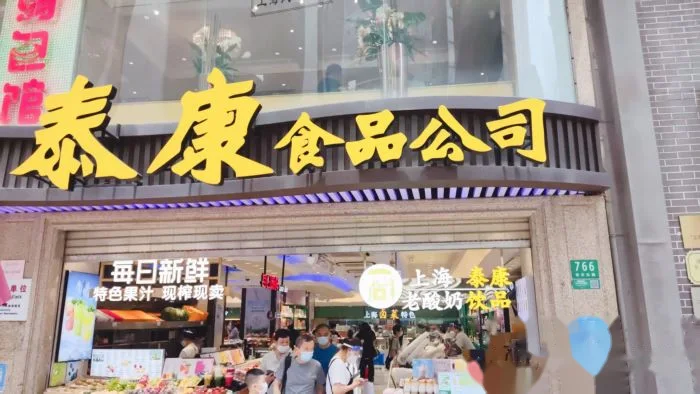
Here is the thing nobody tells you about the Bund: the restaurants on the Bund are not Shanghai restaurants. They're excellent, some of them — French, modernist, ¥800-a-head excellent — but you could be in any capital city on earth eating at them. The English is flawless, the cards all work, and the food speaks no dialect at all.
Walk inland for fifteen minutes and the city changes. The menus lose their English, the prices lose a digit, and the food starts speaking with an accent you came here to hear. This is a walking loop — five stops, all within fifteen minutes of the Bund proper, doable in one long morning, total spend under ¥150 (about $20) if you're sharing.
Stop 1: Dexingguan, Guangdong Road — the 1878 opener
Head southwest off the Bund along Guangdong Road. Ten minutes in, on your left: an old storefront that has been selling noodles since 1878. This is the warm-up — a bowl of braised pork hock and pickled-greens noodles, eaten the traditional way, which is to say standing up and quickly. There's also a takeaway counter selling pork mooncakes that will ruin the airport version of a pork mooncake for you forever.
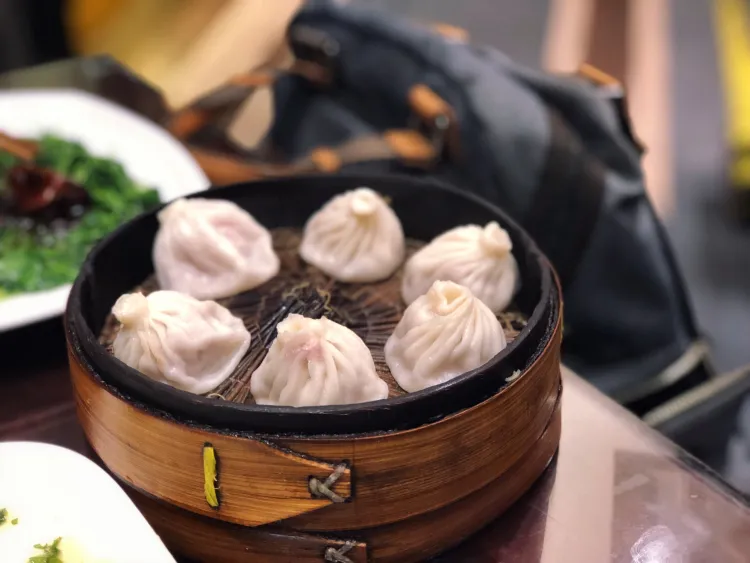
The dish that built the reputation is 焖蹄雪菜大面 — braised pork hock with pickled-greens noodles, ¥30-odd and unchanged in spirit since the Qing dynasty. Go at 7am to see it eaten the traditional way: standing, quickly, before work. The 鲜肉月饼 (pork mooncake) from the takeaway counter is the stealth second reason to come.
Stop 2: Da Hu Chun, South Yunnan Road — the old-school shengjian
Continue south and east toward South Yunnan Road, the old food street. Da Hu Chun is the old school of shengjian bao: the bun with the crisp bottom and no soup inside, because the crisp bottom was the point before soup-filled shengjian became fashionable. Order 二两 (about four buns) and the curry beef soup, and eat them the way the regulars do: immediately, standing, slightly burned.
One honest note: this street is under redevelopment, and shops have been relocating to Shanxi Road South. The card below carries the current verified address and the date we checked it — this is exactly the situation where you should trust a recently-verified card over a three-year-old blog post.
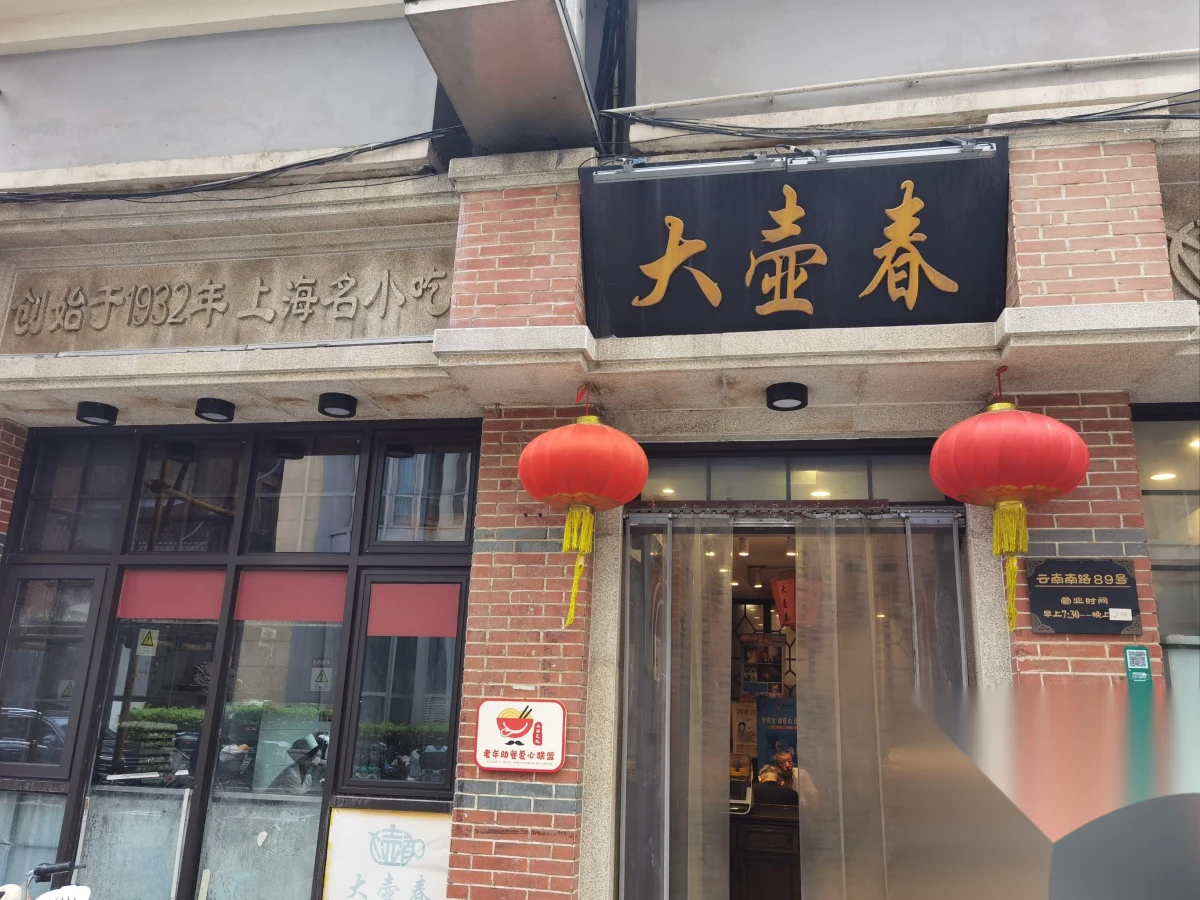
Shanghai's "dry-style" shengjian bao house — no aspic in the filling, so less soup but a deeply crisp bottom. The local order is 「二两鲜肉生煎」 (100g pork buns) with a bowl of curry beef soup.
Stop 3: Jia Jia Tang Bao, Huanghe Road — the cash-only institution
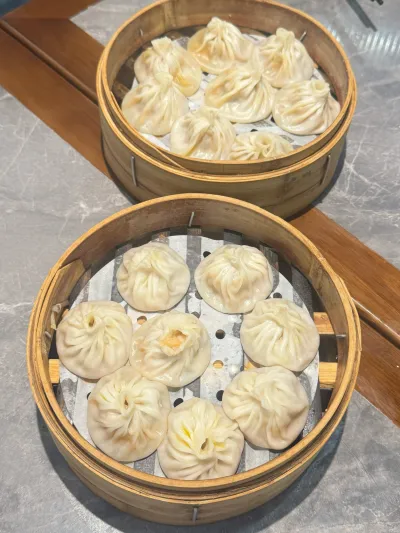
Cut north to Huanghe Road — the street the TV series Blossoms Shanghai made famous, though the soup dumpling shop at No 127 predates the show's cast. Cash only. Line at opening. ¥25 for twelve pork soup dumplings whose skin is thin enough to see the soup move. The crab version costs more and is worth it in season.
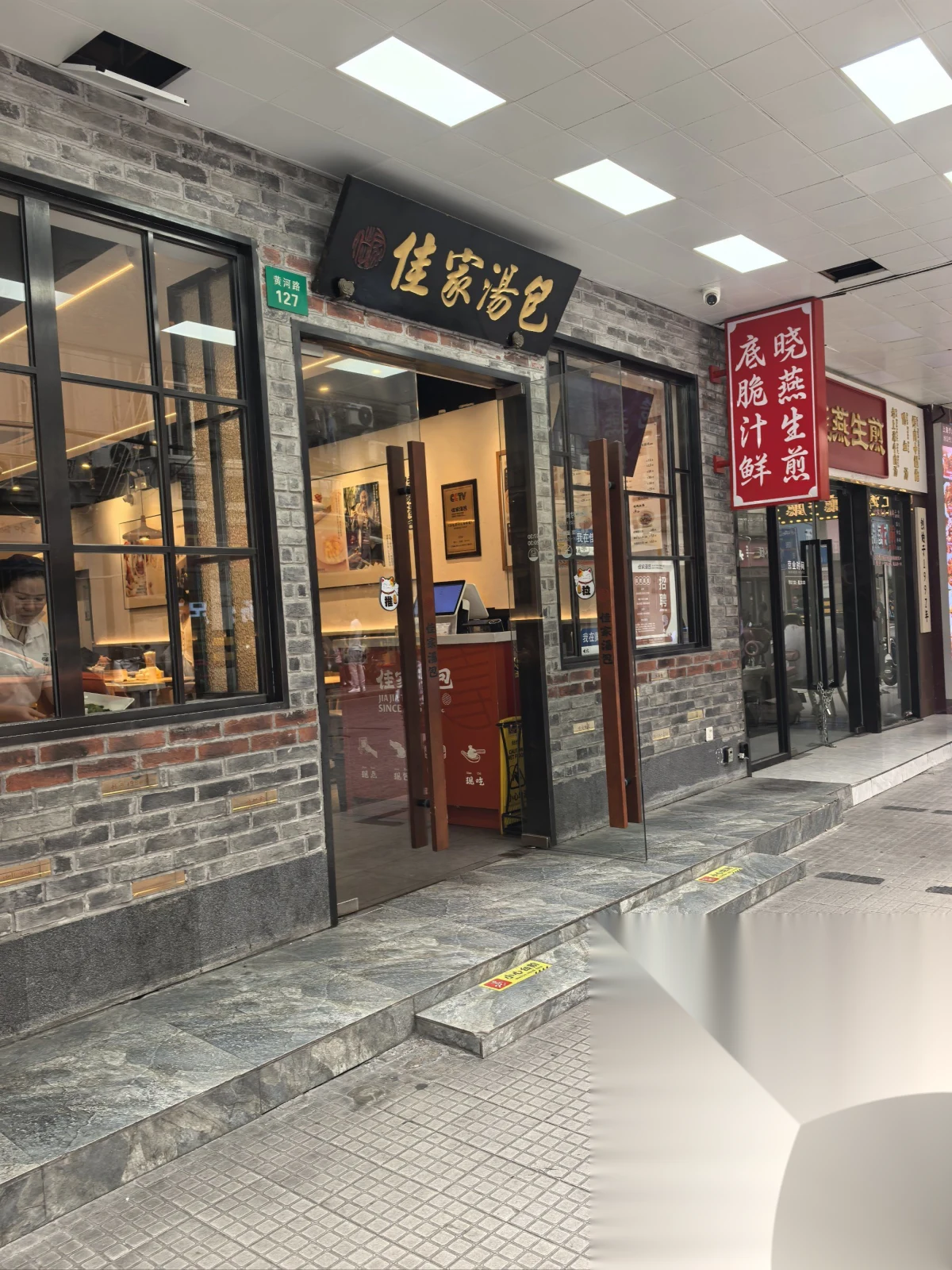
Every English-language Shanghai guide says the same three things about this shop — "cash only", "line starts at 10AM", "¥25 for 12 dumplings" — because they're all true and all still true. Order the 蟹粉鲜肉 (crab-pork) basket, add a small 小馄饨 (wonton soup). The skin is thinner and the soup more violent than at the tourist-flagship dumpling houses.
Stop 4: Lai Lai Xiao Long, Tianjin Road — the queue with 40% foreigners
One street over, behind the Nanjing East Road retail canyon: Tianjin Road, and a queue that is itself a tourist attraction. Crab-and-pork xiaolongbao, Michelin Bib Gourmand two years running, and — by the shop's own count — about 40% of the queue is now foreign visitors who found it on social media. The locals haven't left; they just queue earlier than you now.
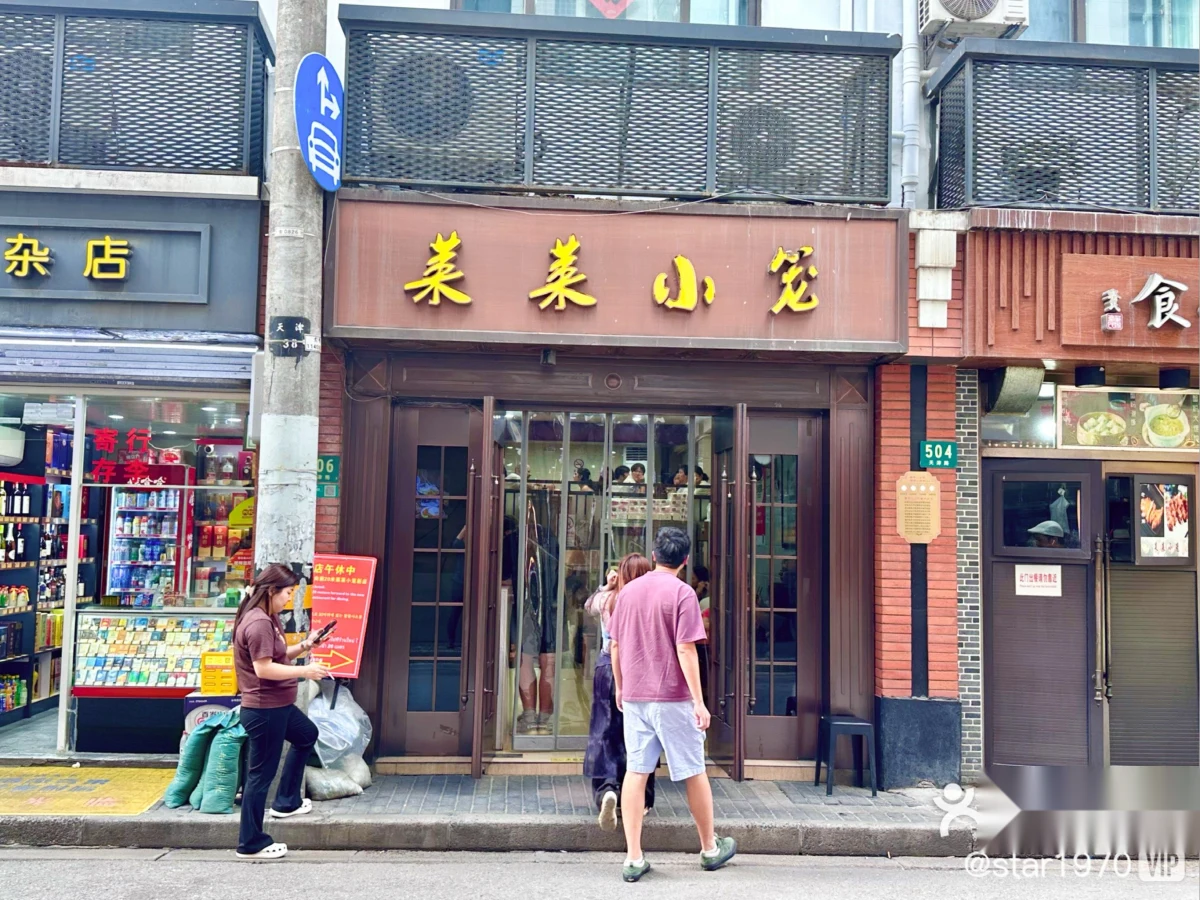
The move: order 蟹粉鲜肉小笼 (crab-and-pork xiaolongbao), eat the first one plain — no vinegar — then dip the rest in the ginger vinegar that arrives with the basket. Roughly 40% of the people queueing with you will be foreign tourists; this is the rare local institution that has quietly become an international one.
Stop 5: Wei Xiang Zhai, Yandang Road — the Spider-Man finisher
Walk south to Yandang Road, the little lane off Huaihai Road, for the dessert of the walk: sesame-paste noodles at the eleven-table shop where Tom Holland and Zendaya ate twice in one trip. ¥14, faintly sweet, peanut-sesame, springy alkaline noodles. If you have made it this far, order the same star combo they did — the noodles, the fried pork chop, the small beef soup — and sit where a supervillain's actors have sat.
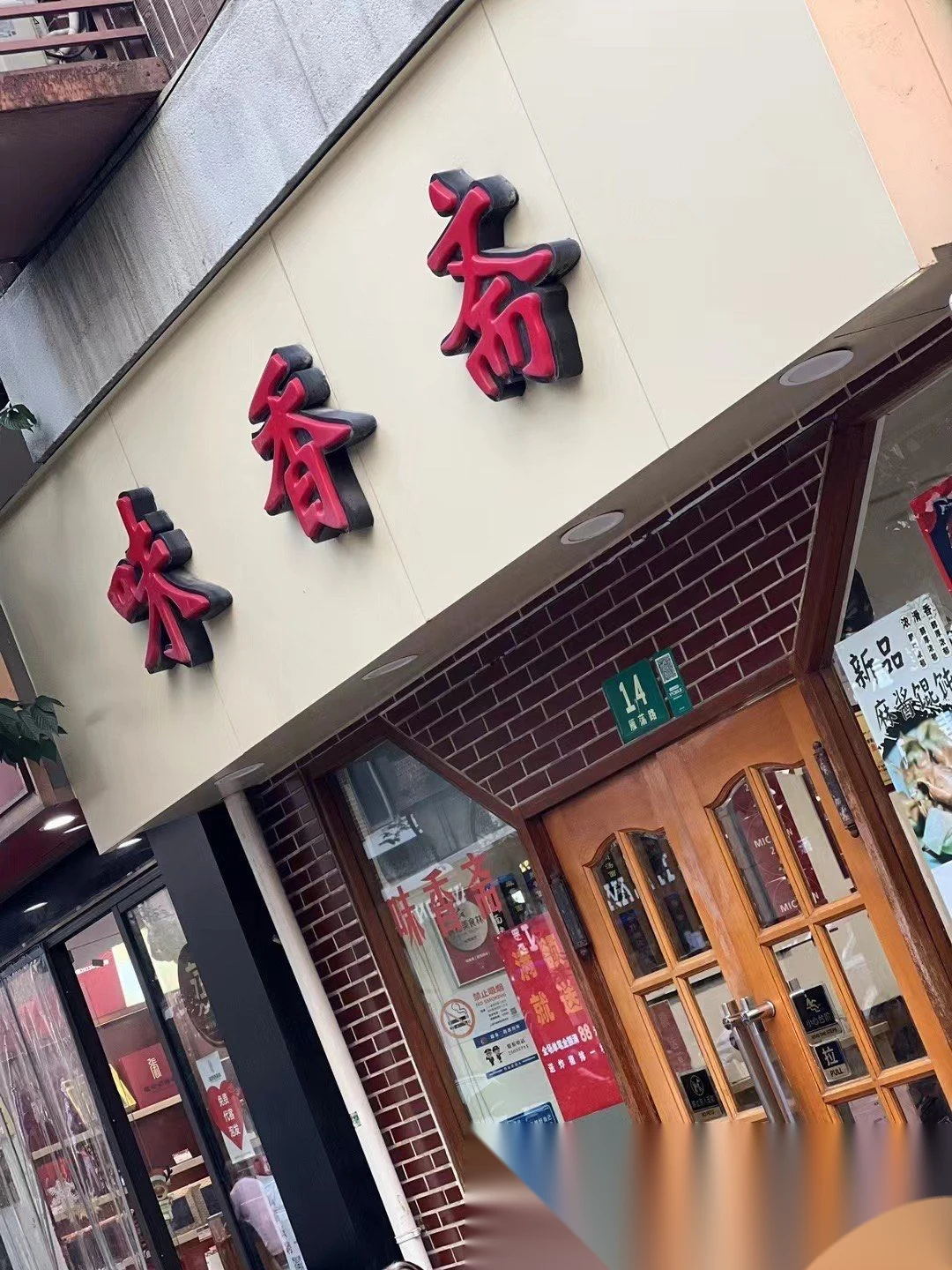
Order the combo every Shanghainese uncle gets: 麻酱拌面 (sesame-paste noodles) plus 炸猪排 (fried pork chop) and a small beef soup. The sesame paste is a peanut-sesame blend, faintly sweet — that's correct, not a mistake. Tom Holland and Zendaya ate here twice in July 2026; the shop now sells a bilingual "star combo" of exactly those three items.
Practical notes for the loop
- Start before 10am. Old shops sell out; queues build at noon. The 9am version of this walk is a different, better experience than the 1pm version.
- Bring cash anyway. Alipay and WeChat Pay with foreign cards work almost everywhere now, but Jia Jia Tang Bao has been cash-only through every payment revolution China has had. Old habits at old shops.
- Total distance: about 3.5 km. Forty minutes of walking spread across a morning of eating. Flat the whole way.
- The order is geographic, not hierarchical. Skip anything you like; every stop stands alone.
The deeper point of this walk: distance from the Bund is a sliding scale of Shanghai-ness. Zero minutes: international. Ten minutes: translated menus appearing. Fifteen minutes: you're in the version of the city that people actually live in — where the food is the reason the neighbourhood exists, not the amenity that surrounds the attraction. You came to Shanghai. You might as well walk fifteen minutes to eat in it.
More from Shanghai
 Food
Food
Liang, Long, Zhi — How Shanghai Actually Sells Its Food
Nothing at an old-school Shanghai shop is sold by "a portion". Noodles come in liang, buns come in liang, dumplings come in long, pancake...
Read →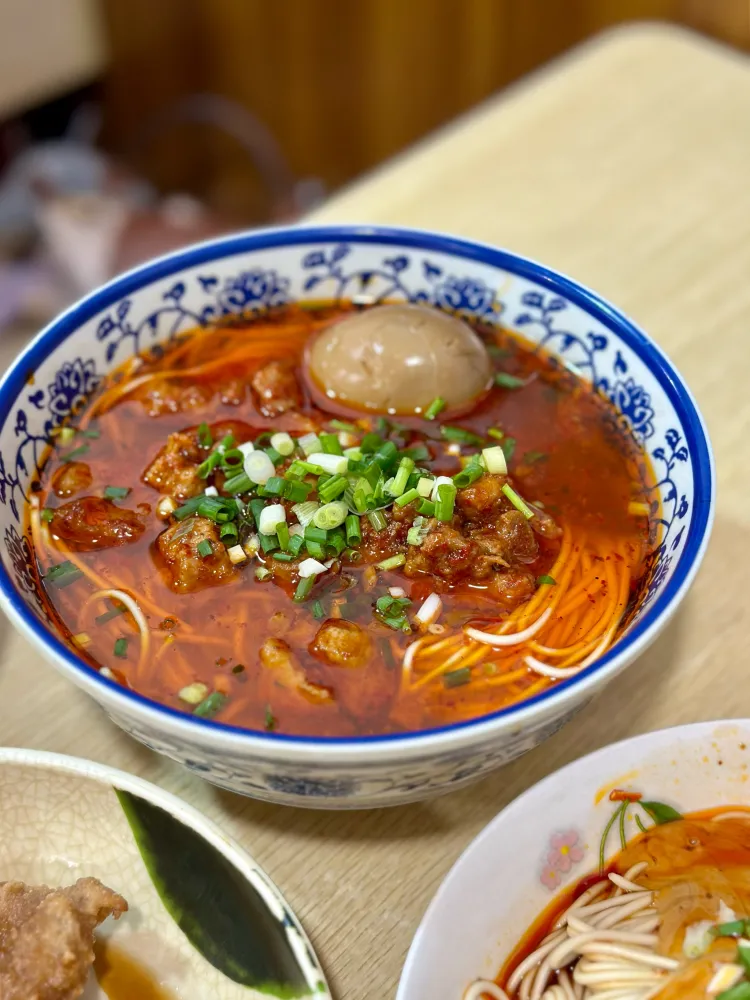 Food
Food
How To Order Noodles In Shanghai Like You Live Here
Hard noodles or soft. Soup on the side or in the bowl. Scallions held back or doubled. The words that change what arrives at your table —...
Read → Food
Food
The 10 Tables Every First-Time Visitor Should Eat At In Shanghai
Not the ten fanciest, not the ten most famous — the ten places where the food is genuinely good, the price is genuinely small, and the ex...
Read → Food
Food
Eating At Yu Garden Without Getting Trapped
Yu Garden Bazaar is where the invention of the soup dumpling is genuinely worth seeing — and where the worst meal of your trip is genuine...
Read → How-to
How to Order Food in China With No English
You don't need to speak Chinese. You need to copy, paste and point. The exact five moves that get food in front of you — plus the sentenc...
Read →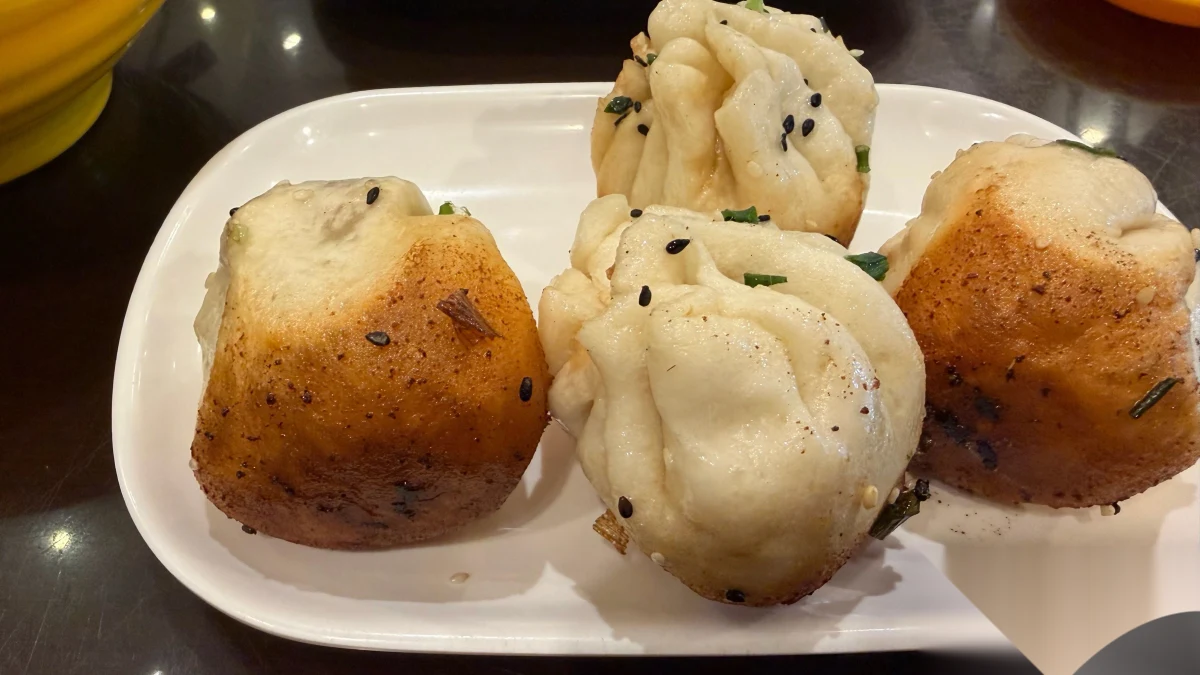 Food
Food
The Two Schools of Shanghai's Pan-Fried Bun
One bursts with scalding soup. One has almost none. Locals have been arguing about which is correct for a century — and most visitors onl...
Read →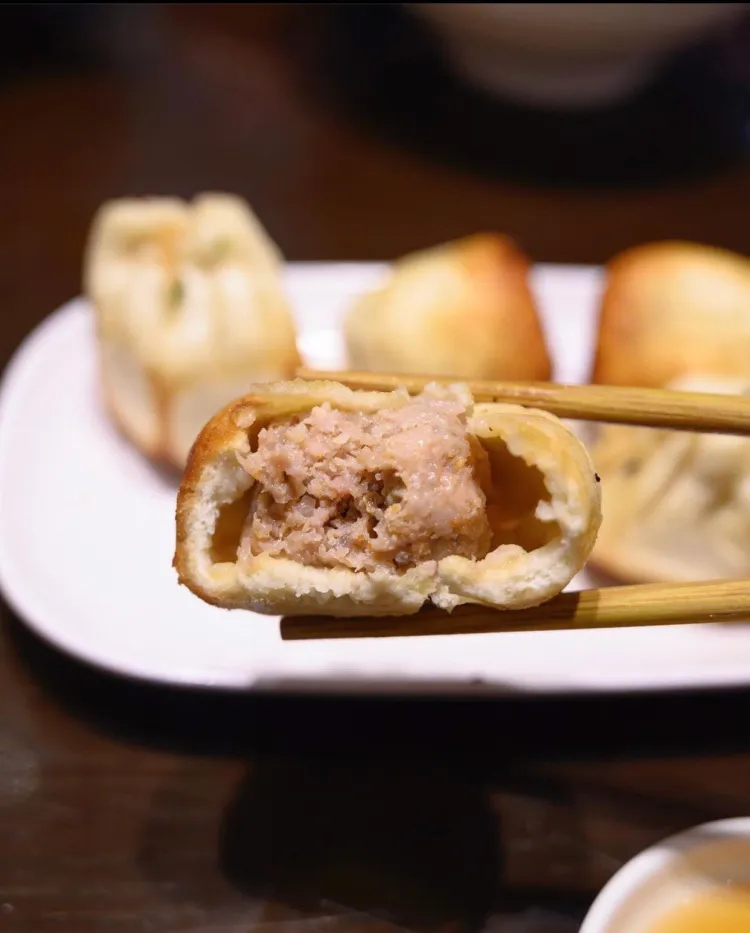 Food
Food
Where Shanghai Eats Breakfast
Four breakfasts, four street windows you would walk straight past. What locals eat before nine, what it costs, and the Chinese words that...
Read →