
Unlisted China / Shanghai / Guides
How To Order Noodles In Shanghai Like You Live Here
Hard noodles or soft. Soup on the side or in the bowl. Scallions held back or doubled. The words that change what arrives at your table — and the ones that just get you fed.
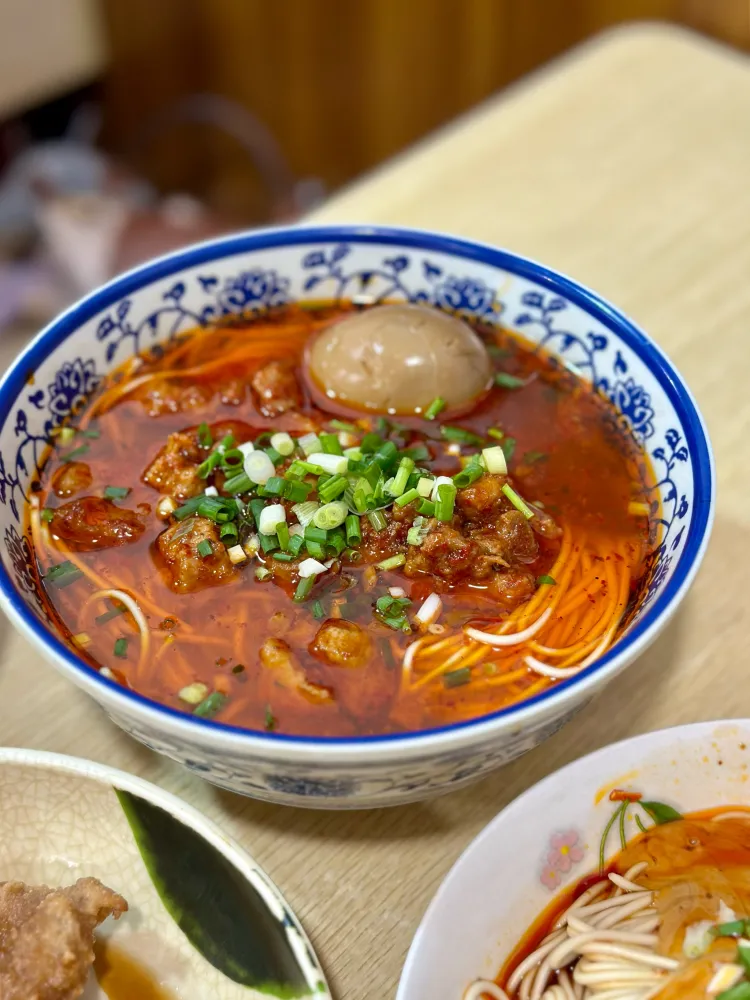
Walk into a Shanghai noodle shop at noon and the board above the counter is not a menu. It's a vocabulary test. 面浇. 过桥. 硬面. 紧汤. The regulars rattle off five words and get a bowl that is theirs; tourists point at a picture and get the default. The gap between the two bowls is the entire reason this guide exists.
The good news: the vocabulary is small. Six terms cover ninety percent of what regulars say, and none of them require you to pronounce anything — you can show this page on your phone.
The four words that change the noodles themselves
硬面 / 硬硬面 — "hard noodles", and if you mean it, "hard hard noodles." The single most useful word in this guide. Default Shanghai noodles are cooked soft, the way many locals over fifty prefer them. 硬面 gets you a springier, chewier bowl — closer to al dente, closer to what most visitors actually want. The doubled 硬硬面 is the version for people who complain the springy version is soft. Start with the single 硬面.
过桥 — "crossed the bridge." Nothing to do with Yunnan's bridge-crossing noodles, despite the borrowed name. In Shanghai it means the toppings come on a separate plate, not on the noodles. Why would you want that? Because a topping that sits on hot noodles keeps cooking and goes limp; a topping that arrives beside them stays crisp and distinct. Order 蛤蜊猪肝面过桥 — clams and pork liver on the side — and you assemble each bite yourself.
紧汤 / 宽汤 — "tight soup" / "wide soup." How much broth. 紧汤 is barely enough to coat the noodles; 宽汤 is a proper soup bowl. The default is somewhere in the middle. If you're eating 拌面 (tossed, sauce-style noodles) this doesn't apply — there is no soup, just the sauce.
免香头 / 重香头 — "no aromatics" / "extra aromatics." 香头 is the scattering of scallion and garlic greens that finishes most bowls. Some people hate raw scallion; some people are here for it. Now you can be either person, on purpose.
The two words that change everything else
浇头 — the topping, sold like a component. Shanghai noodle shops are build-your-own: pick the noodle, pick the 浇头 (braised pork hock? clams? spicy minced pork? eel?), pick the format (soup 汤面 or tossed 拌面). The 浇头 list is usually on the wall, in Chinese, with no pictures. Each one in this guide's shop cards names the shop's signature 浇头 — that's your order.
二两 / 三两 — how noodles are measured. Not "a bowl". Old-school shops sell by weight: 二两 (100g) is standard, 三两 (150g) is large. The same system governs shengjian bao — more on that in our guide to how Shanghai counts its food.
Where to practise, in order of difficulty
Start at Dexingguan — the 1878 house on Guangdong Road. The system is old, the staff have seen every possible order, and the signature braised pork hock noodle (焖蹄雪菜大面) is nearly impossible to order wrong. Say 二两,硬面 and you've already separated yourself from the tourist population.
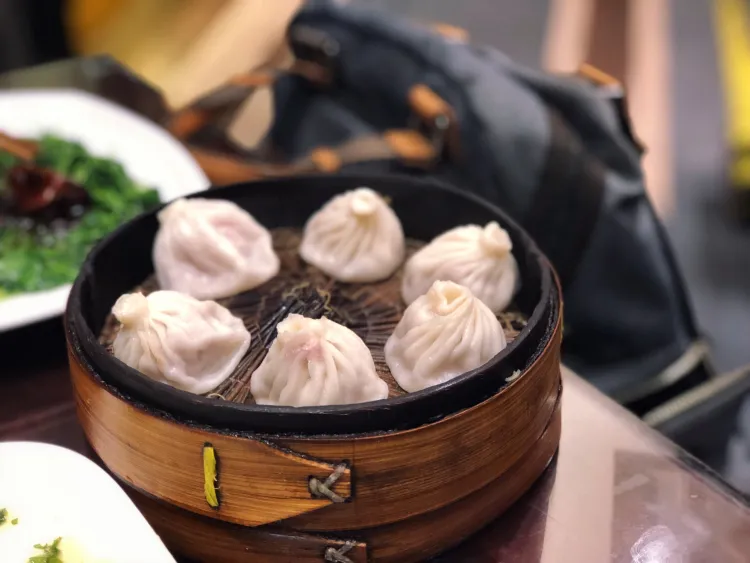
The dish that built the reputation is 焖蹄雪菜大面 — braised pork hock with pickled-greens noodles, ¥30-odd and unchanged in spirit since the Qing dynasty. Go at 7am to see it eaten the traditional way: standing, quickly, before work. The 鲜肉月饼 (pork mooncake) from the takeaway counter is the stealth second reason to come.
Level up at Ma Haixia (the shop the English internet still calls A Niang). The yellow croaker noodles are the point; add 咸菜 (pickled greens) the way locals do, and ask for 硬面. It's a one-dish shop, which makes it the perfect low-stakes place to use actual words.
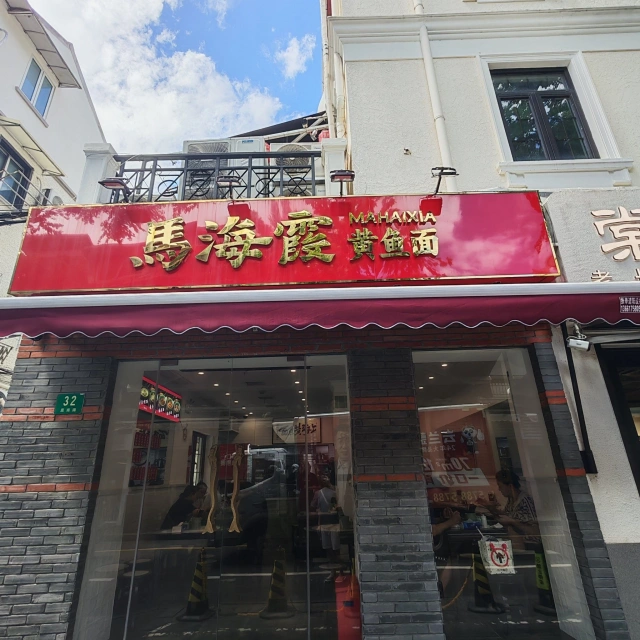
The signature is the yellow croaker noodle soup — locals order it as 「黄鱼面加咸菜」 (with pickled greens). The topping is cooked to order and often sells out after 11am. The shop is tiny; go early and you likely won't queue.
Graduate to Huxi Old Longtang — because when the city's highest-rated bowl (4.6) is clam and pork-liver noodles, you want the components arriving exactly how you like them. This is where 过桥 earns its keep.
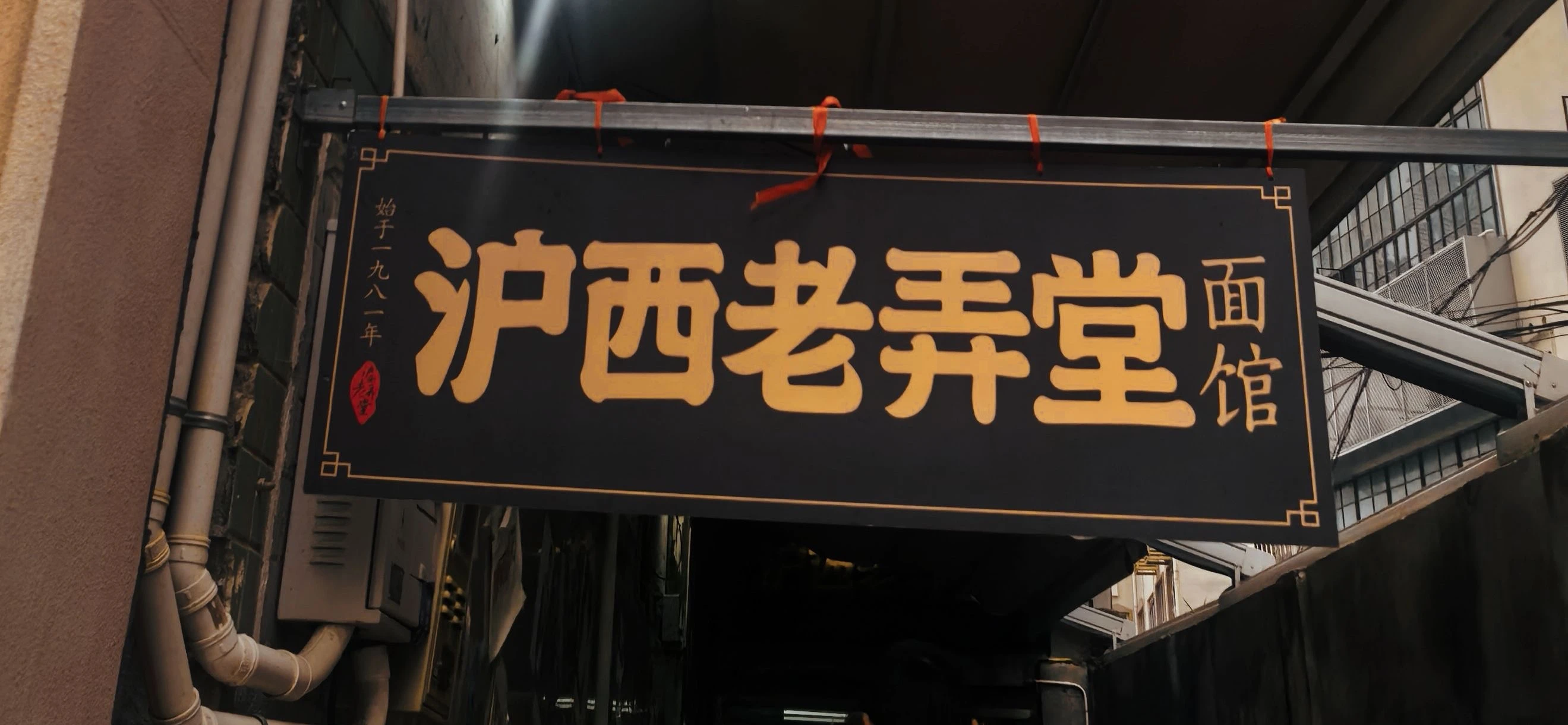
The signature is 蛤蜊猪肝面 — clam and pork-liver noodles. Order it and you'll be eating what the highest-rated bowl in this entire guide tastes like: taste 4.6 on Dianping, the top score of any shop here. The pork liver is the controversial half — silky if you're used to offal, challenging if you're not. The safe landing is 葱油拌面 (scallion oil noodles) with a fried pork chop.
And for the no-soup school: Wei Xiang Zhai. A bowl of sesame-paste 拌面 is where 硬面 matters most — the paste coats springy noodles better than soft ones. Add a fried pork chop, and you've ordered the combo that a certain Spider-Man actor ordered twice.
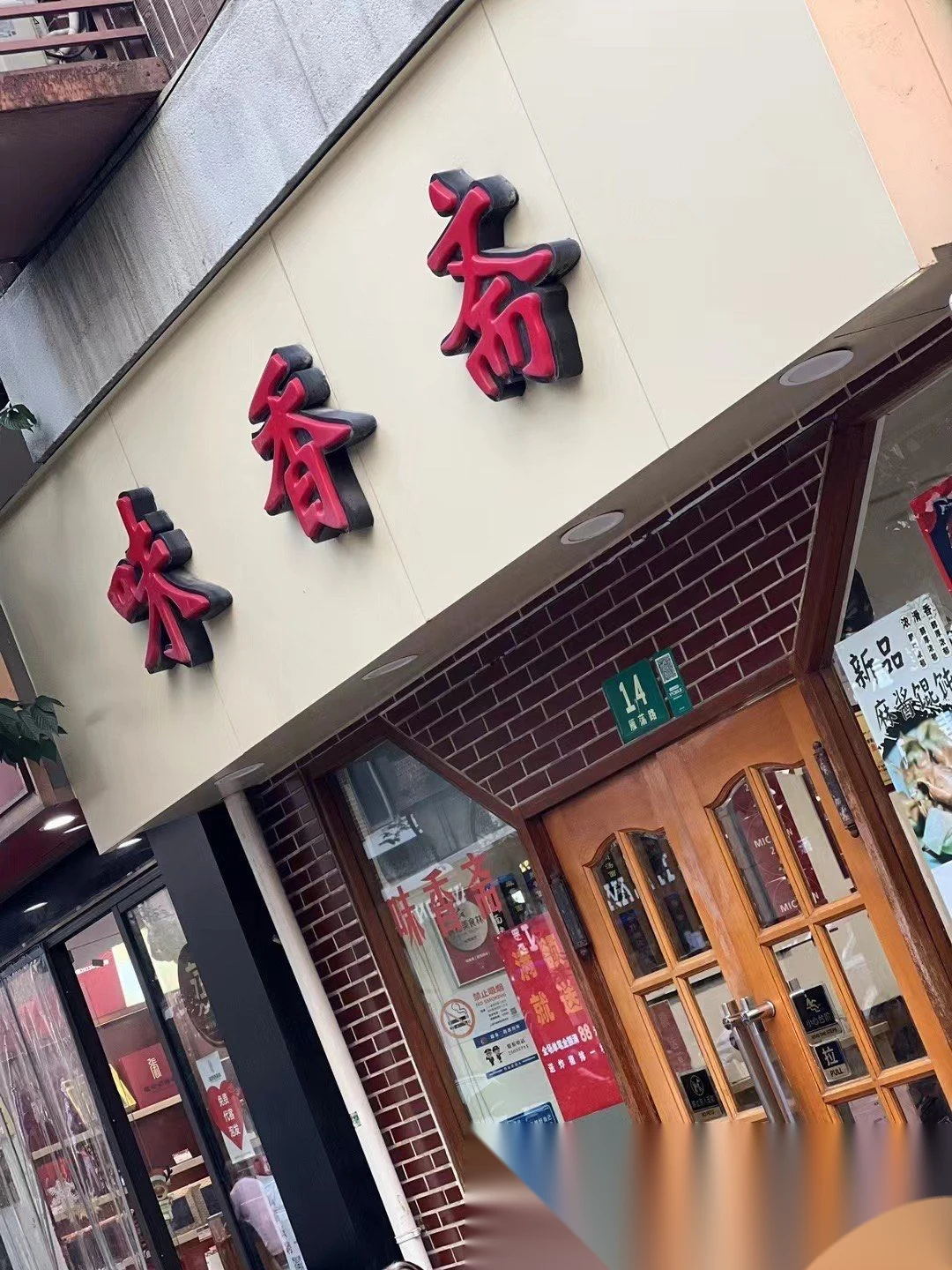
Order the combo every Shanghainese uncle gets: 麻酱拌面 (sesame-paste noodles) plus 炸猪排 (fried pork chop) and a small beef soup. The sesame paste is a peanut-sesame blend, faintly sweet — that's correct, not a mistake. Tom Holland and Zendaya ate here twice in July 2026; the shop now sells a bilingual "star combo" of exactly those three items.
The six-word cheat sheet
| 中文 | Say it as | It gets you | |---|---|---| | 硬面 | yung-mien | Springier, chewier noodles | | 过桥 | guo-chyao | Toppings on the side | | 紧汤 | jin-tang | Minimal broth | | 宽汤 | kwan-tang | Full soup bowl | | 免香头 | myen-shyang-tou | No scallions/greens | | 二两 | ar-liang | Standard portion (also: how shengjian is sold) |
You will not pronounce these correctly, and it does not matter — that's what phone screens are for. Show the characters. Hold up fingers. The aunt at the counter has been decoding gestures since before you were born.
One last thing worth knowing: the words above are Shanghainese-shop words, not restaurant words. Use them in a hotel noodle bar and you'll get a polite blank. Use them in the shops on this page and watch the person beside you look up from their bowl — in the good way.
More from Shanghai
 Food
Food
Fifteen Minutes From The Bund, The Food Changes Completely
The Bund's own restaurants speak fluent English and take every card. Walk fifteen minutes inland and you're in a different Shanghai: olde...
Read → Food
Food
Liang, Long, Zhi — How Shanghai Actually Sells Its Food
Nothing at an old-school Shanghai shop is sold by "a portion". Noodles come in liang, buns come in liang, dumplings come in long, pancake...
Read → Food
Food
The 10 Tables Every First-Time Visitor Should Eat At In Shanghai
Not the ten fanciest, not the ten most famous — the ten places where the food is genuinely good, the price is genuinely small, and the ex...
Read → Food
Food
Eating At Yu Garden Without Getting Trapped
Yu Garden Bazaar is where the invention of the soup dumpling is genuinely worth seeing — and where the worst meal of your trip is genuine...
Read → How-to
How to Order Food in China With No English
You don't need to speak Chinese. You need to copy, paste and point. The exact five moves that get food in front of you — plus the sentenc...
Read → Food
Food
The Two Schools of Shanghai's Pan-Fried Bun
One bursts with scalding soup. One has almost none. Locals have been arguing about which is correct for a century — and most visitors onl...
Read → Food
Food
Where Shanghai Eats Breakfast
Four breakfasts, four street windows you would walk straight past. What locals eat before nine, what it costs, and the Chinese words that...
Read →