
Unlisted China / Shanghai / Guides
Where Shanghai Eats Breakfast
Four breakfasts, four street windows you would walk straight past. What locals eat before nine, what it costs, and the Chinese words that get it in front of you.
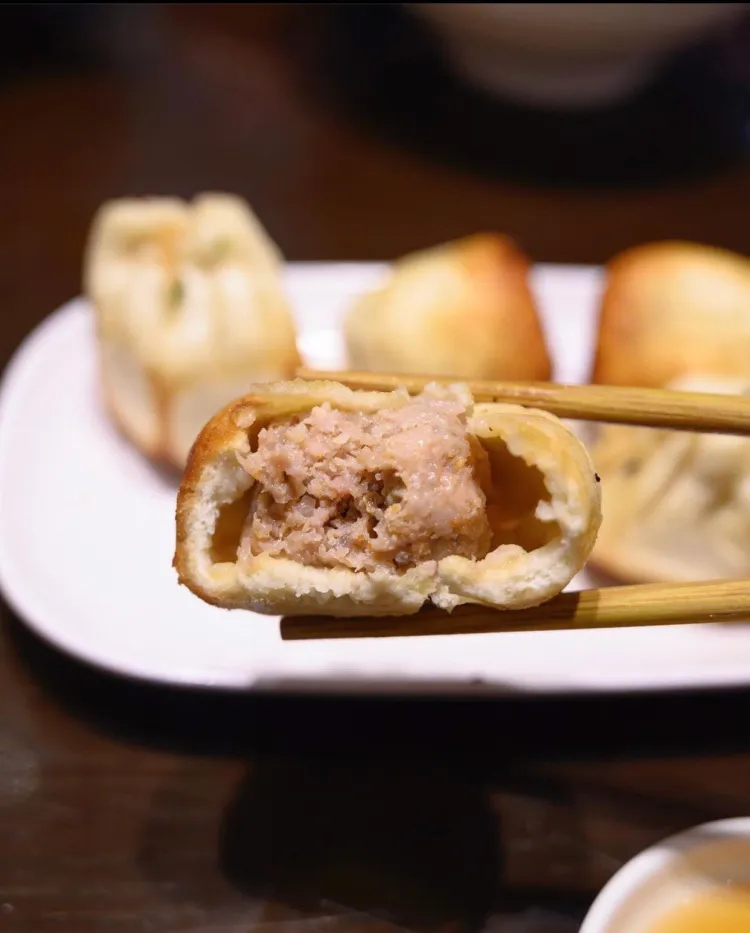
Hotel breakfast in Shanghai is a story about hotel breakfast. The city's own breakfast happens somewhere else entirely: on pavements, through service windows, mostly before nine in the morning, and almost entirely in Chinese.
It's not hidden. It's just not aimed at you — no English sign, no menu you can read, no website, sometimes not even a door. You walk past it on the way to somewhere else. This guide is about the four things Shanghainese people actually eat in the morning, where to get each one, and what to say when you get there.
The rules of Shanghai breakfast
Before the food, the five things that trip up every first-timer:
- It's a window, not a restaurant. Most breakfast places are a counter facing the street. You order at the window, you take the paper bag, you eat standing up or walking. Sitting down is the exception.
- The queue is the information. A line of office workers and retirees at 7:40am tells you more than any review. No queue at 8am on a weekday is a bad sign.
- When it's gone, it's gone. Most places cook a fixed batch and close when it sells out. By 10:30am you may find one or two things left.
- Cash is awkward; QR codes are normal. Set up Alipay or WeChat Pay with a foreign card before you land. Small breakfast windows often can't take cash at all, and never take Visa.
- Ordering is pointing. You will not be asked to pronounce anything. Copy the Chinese characters, show them, hold up fingers for quantity. That's the whole skill.
1. Shengjian bao — the pan-fried pork bun
If Shanghai has one breakfast, it's this: a fist-sized dough bun, pork inside, fried in a shallow oil bath in a giant flat pan, finished with sesame and spring onion. Crisp on the bottom, soft on top.
There are two schools, and locals have opinions about which is correct. The old-school version has no soup inside; the newer one is full of scalding broth. More on that fight in our guide to the two shengjian schools — for breakfast, go to the old one.
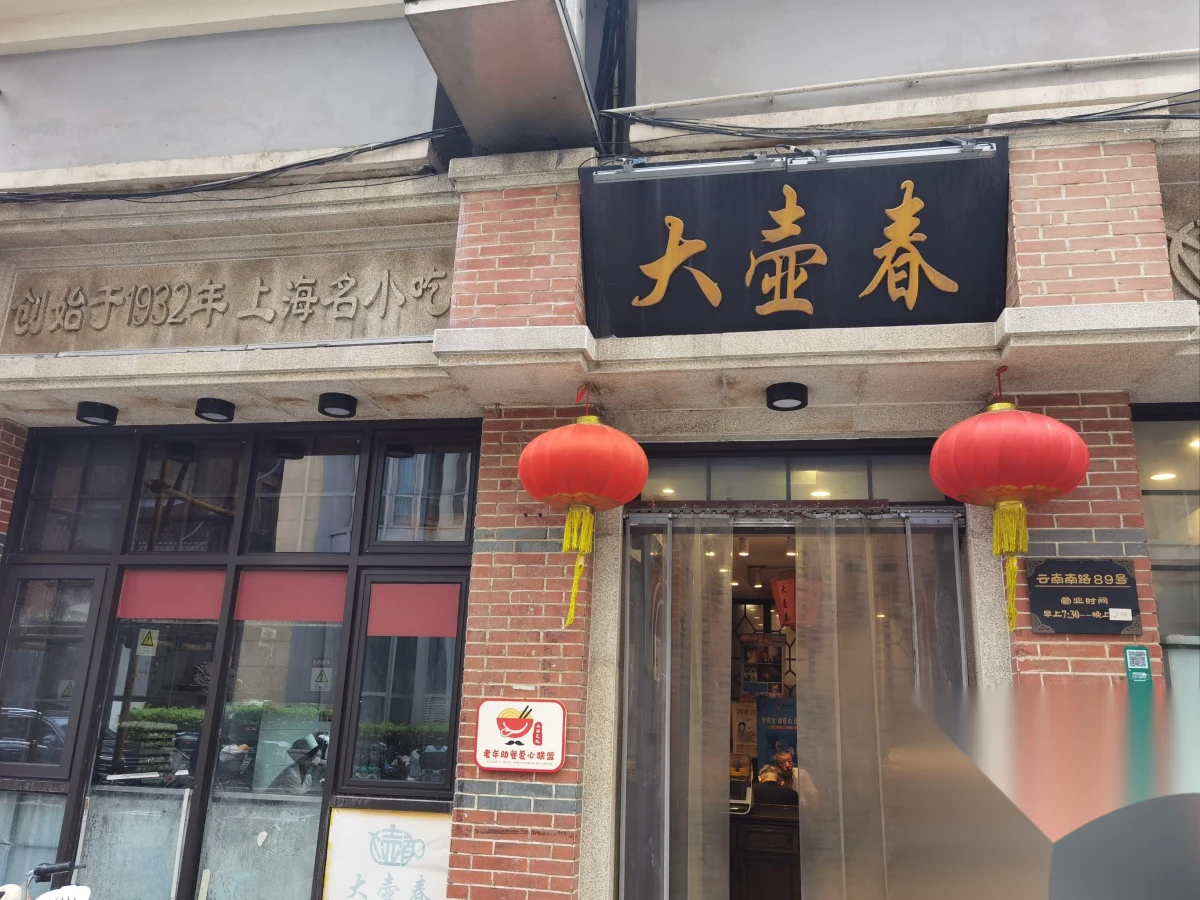
Shanghai's "dry-style" shengjian bao house — no aspic in the filling, so less soup but a deeply crisp bottom. The local order is 「二两鲜肉生煎」 (100g pork buns) with a bowl of curry beef soup.
Order 二两鲜肉生煎 (100g of pork buns, about four) and a bowl of 咖喱牛肉汤 (curry beef soup). That combination — fried bun, thin curry soup — is the standard Shanghai breakfast pairing, and it's been the standard since before the war.
2. Noodle soup — the sit-down breakfast
Not everyone eats standing up. Shanghai's noodle shops open early and serve proper sit-down breakfasts: a bowl of wheat noodles in broth with a topping on top. The topping is the whole point, and the local favourite is fish.
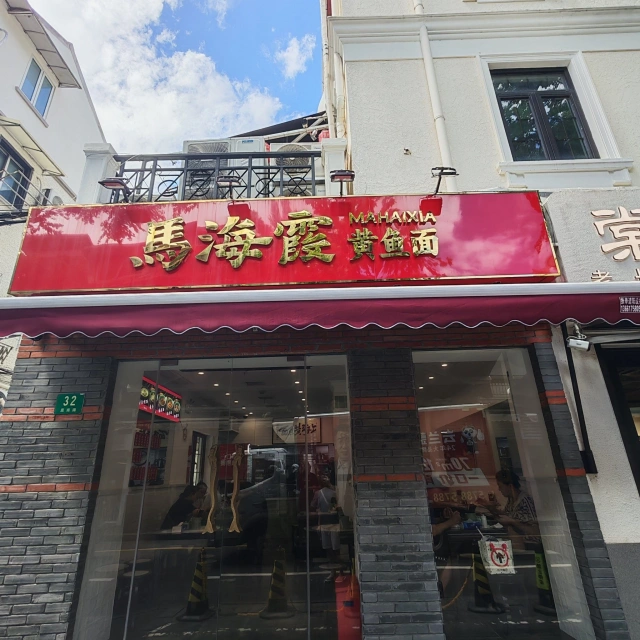
The signature is the yellow croaker noodle soup — locals order it as 「黄鱼面加咸菜」 (with pickled greens). The topping is cooked to order and often sells out after 11am. The shop is tiny; go early and you likely won't queue.
The signature is 黄鱼面 (yellow croaker noodle soup) — a small local fish, simmered into the broth, the flesh laid on top. Locals add pickled greens: 黄鱼面加咸菜. The topping is cooked to order and regularly sells out before noon, which is why this is breakfast and not dinner.
One useful thing to know: noodle shops here are busy, small, and turn tables fast. If there's an empty seat at a table with someone already eating, it's normal to sit down. Nobody will mind.
3. Sticky rice cakes — the sweet one
Shanghainese breakfast has a sweet branch, and it looks nothing like a pastry. Sticky rice is pounded, rolled around a filling, and cut into pieces. Chewy, dense, not very sweet, and very filling for the money.
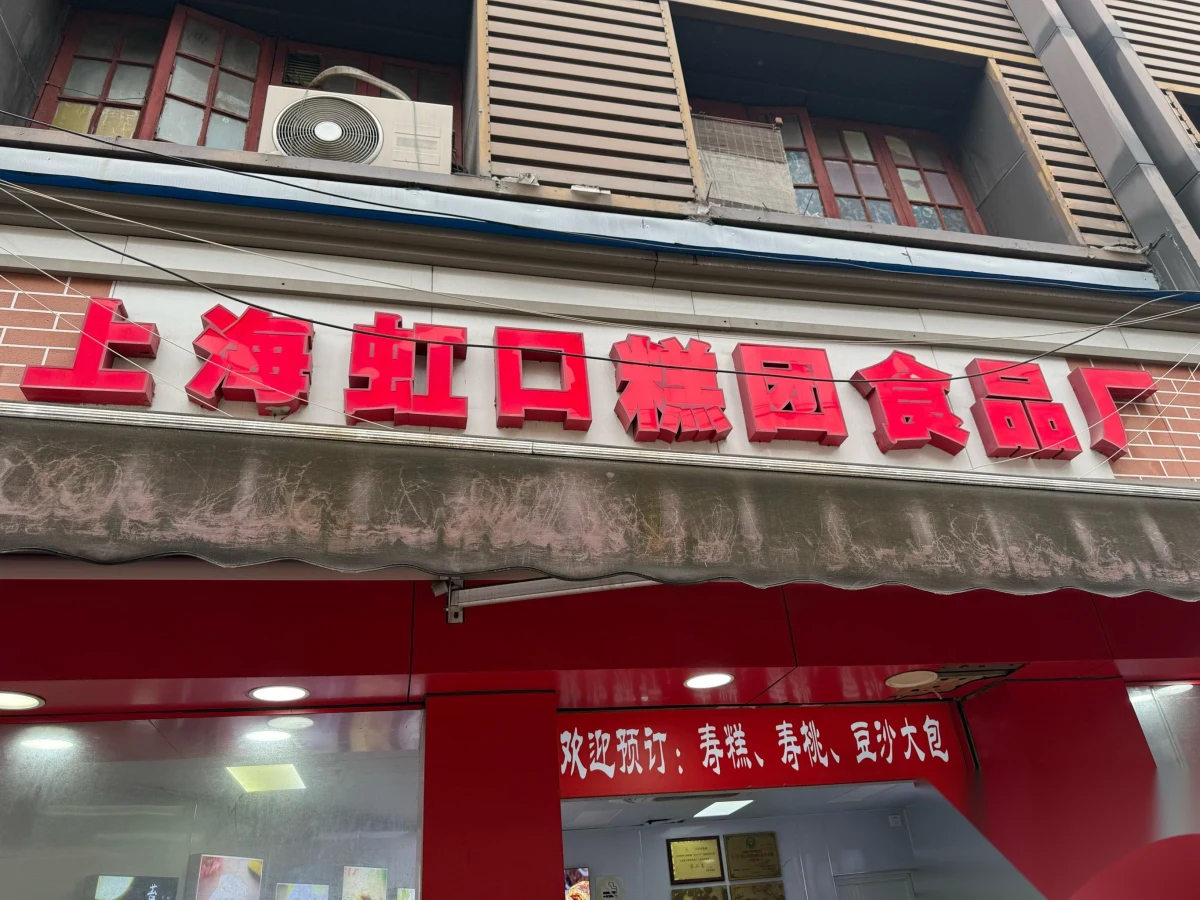
An old-school sticky-rice cake window. The signatures are 「条头糕」 (red bean roll) and 「双酿团」 (double-filled ball). Sweet and savoury both — locals grab these for breakfast. Eat them warm; they go hard when cold.
Two to know: 条头糕 — a long roll of sticky rice wrapped around red bean paste — and 双酿团, the double-filled ball with both red bean and sesame inside. Buy them in the morning while they're still warm; they harden as they cool.
This is the cheapest breakfast on this list and the one with the least English in the world. There is no menu to point at in most cases — you point at the tray.
4. The fourth breakfast you'll see everywhere
The one that isn't in any list of famous Shanghai foods but is on every corner: 豆浆 (sweet or savoury soy milk), 油条 (fried dough stick), 粢饭 (sticky rice rolled around a filling), and 大饼 (flat sesame bread). Collectively these are called 四大金刚 — the Four Heavenly Kings.
You'll find them from carts and tiny shops on almost any residential street before 8:30am. Point at what you want, hold up fingers. A breakfast here costs less than a coffee. Try the savoury soy milk at least once: warm soy milk with vinegar, dried shrimp, sesame oil and scallion, which sounds like a mistake and tastes like a good decision.
What it costs
- Sticky rice cakes: about ¥6–8 per piece
- Shengjian bao with soup: about ¥20–25 for one person
- A bowl of noodle soup: about ¥28–40, more for fish
- Soy milk and fried dough: under ¥10
Breakfast in Shanghai is a ¥10–40 affair per person. If you're paying ¥120 for it, you're in a hotel.
How to actually order
- Copy the Chinese name of the place into Amap, Apple Maps or Didi before you leave. English names mostly don't resolve.
- Copy the dish name too — 黄鱼面, 二两鲜肉生煎, 条头糕.
- At the window, show the characters and hold up fingers for how many.
- Pay by QR code. If your Alipay or WeChat Pay isn't working, have exactly the right amount of cash in small notes.
- Take the bag. Eat it now, not later — fried food goes soft in ten minutes.
The two mistakes
Going at 10am. The good stuff is gone and the queue is gone with it. If you're not an early riser, target 7:30–9:00 and treat it as the day's first activity rather than an afterthought before sightseeing.
Expecting to sit. Plenty of these places have no seating at all. This isn't rudeness, it's the format. Find a wall, a step, or a bench, or walk while you eat.
More from Shanghai
 Food
Food
Fifteen Minutes From The Bund, The Food Changes Completely
The Bund's own restaurants speak fluent English and take every card. Walk fifteen minutes inland and you're in a different Shanghai: olde...
Read →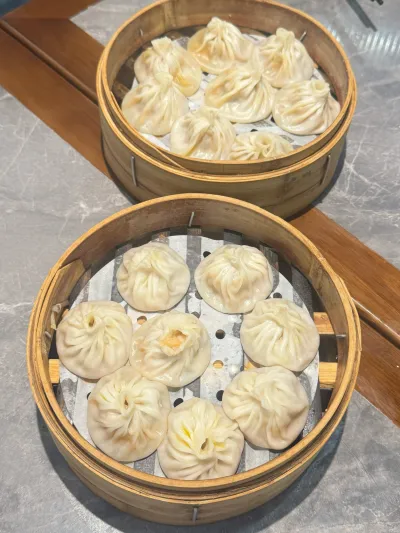 Food
Food
Liang, Long, Zhi — How Shanghai Actually Sells Its Food
Nothing at an old-school Shanghai shop is sold by "a portion". Noodles come in liang, buns come in liang, dumplings come in long, pancake...
Read →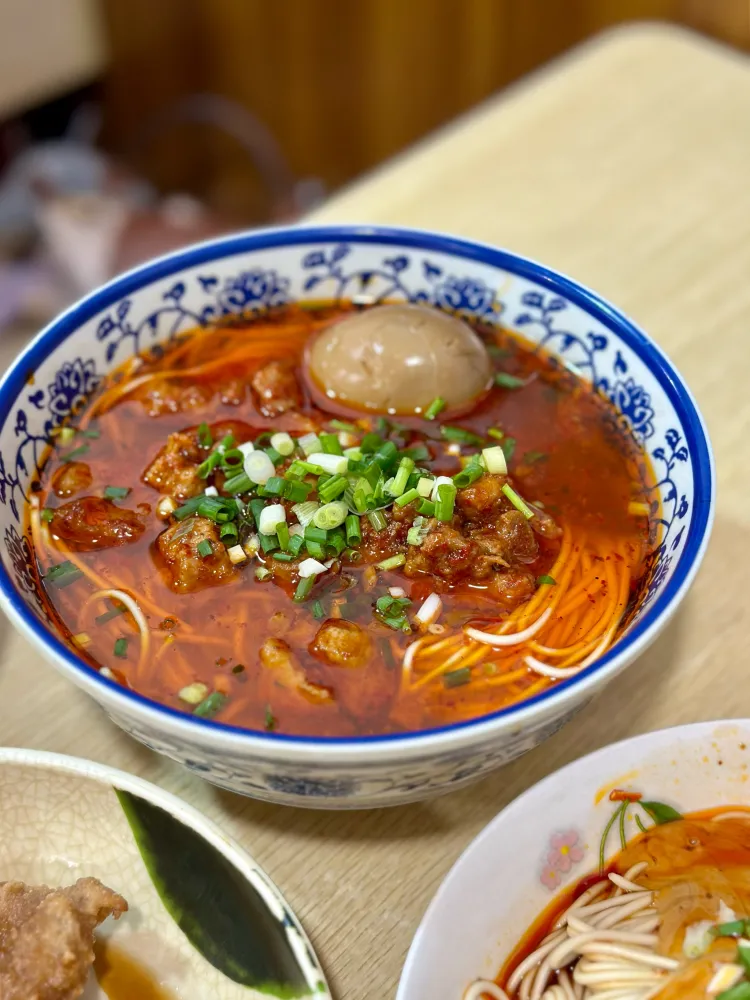 Food
Food
How To Order Noodles In Shanghai Like You Live Here
Hard noodles or soft. Soup on the side or in the bowl. Scallions held back or doubled. The words that change what arrives at your table —...
Read → Food
Food
The 10 Tables Every First-Time Visitor Should Eat At In Shanghai
Not the ten fanciest, not the ten most famous — the ten places where the food is genuinely good, the price is genuinely small, and the ex...
Read → Food
Food
Eating At Yu Garden Without Getting Trapped
Yu Garden Bazaar is where the invention of the soup dumpling is genuinely worth seeing — and where the worst meal of your trip is genuine...
Read →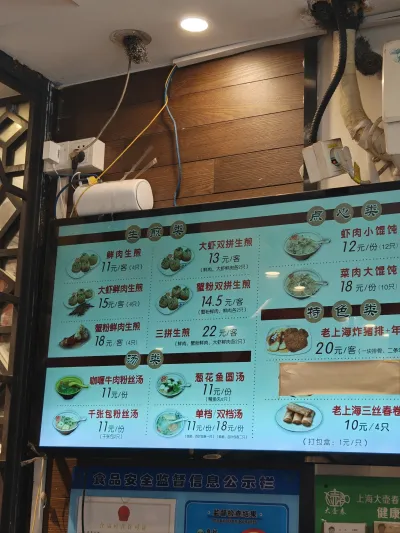 How-to
How to Order Food in China With No English
You don't need to speak Chinese. You need to copy, paste and point. The exact five moves that get food in front of you — plus the sentenc...
Read →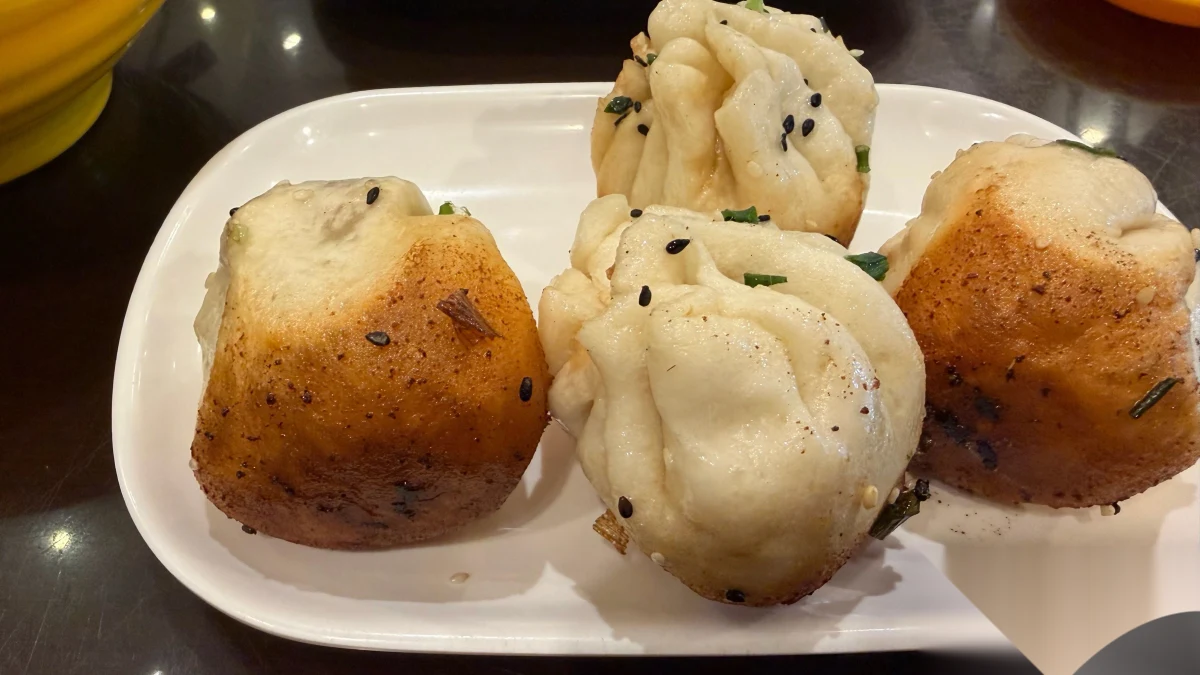 Food
Food
The Two Schools of Shanghai's Pan-Fried Bun
One bursts with scalding soup. One has almost none. Locals have been arguing about which is correct for a century — and most visitors onl...
Read →