
Unlisted China / Shanghai / Guides
The 10 Tables Every First-Time Visitor Should Eat At In Shanghai
Not the ten fanciest, not the ten most famous — the ten places where the food is genuinely good, the price is genuinely small, and the experience is genuinely Shanghai. Ranked, mapped, and ordered in Chinese.
You have three days in Shanghai and a list of "must-eats" copied from somewhere on the internet that was probably written before the pandemic. Here is a better list.
The rules we used to build it: the food has to be genuinely good (we checked the ratings locals actually use), the bill has to be small (nine of the ten are under ¥90 a head — that's about $12), and the experience has to be something you cannot get in your Chinatown back home. That last one quietly disqualifies a lot of famous names — if the restaurant has a Michelin-starred international sibling in twelve cities, you already know what it tastes like.
One warning before the list: all of these are old-school shops. They take cash or Chinese QR codes, not foreign cards. Set up Alipay or WeChat Pay with your foreign card before you leave the hotel — it takes five minutes and unlocks everything below.
1. Wei Xiang Zhai — the "Spider-Man noodles"
A 37-square-metre shop, eleven tables, and a bowl of sesame-paste noodles that costs about $2. In July 2026, Tom Holland and Zendaya — in Shanghai for a film premiere — came here twice. The shop now serves a bilingual "star combo" of exactly what they ate, and 50 to 60 foreign orders a day walk through the door.
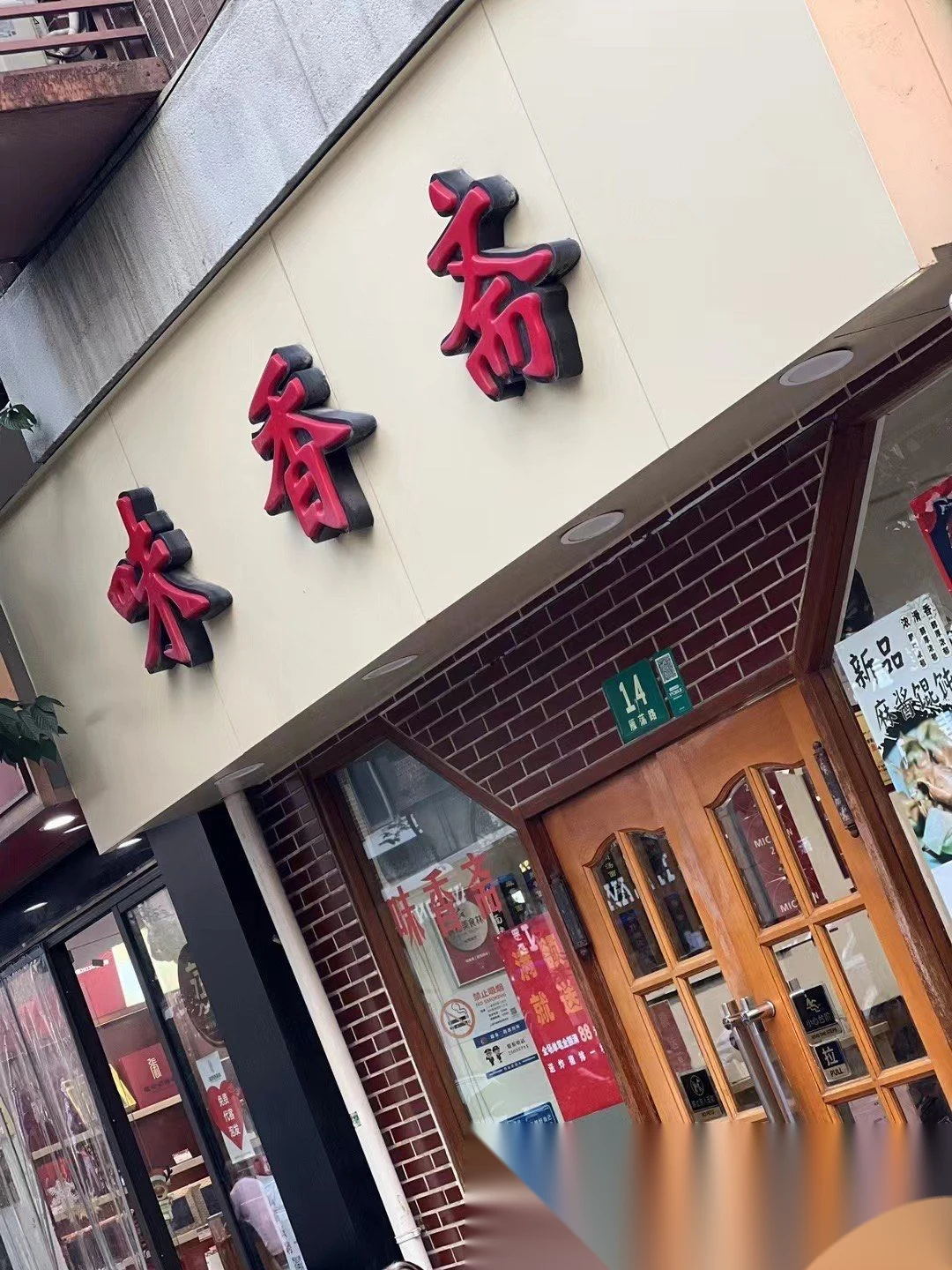
Order the combo every Shanghainese uncle gets: 麻酱拌面 (sesame-paste noodles) plus 炸猪排 (fried pork chop) and a small beef soup. The sesame paste is a peanut-sesame blend, faintly sweet — that's correct, not a mistake. Tom Holland and Zendaya ate here twice in July 2026; the shop now sells a bilingual "star combo" of exactly those three items.
2. Lai Lai Xiao Long — the queue worth 30 minutes
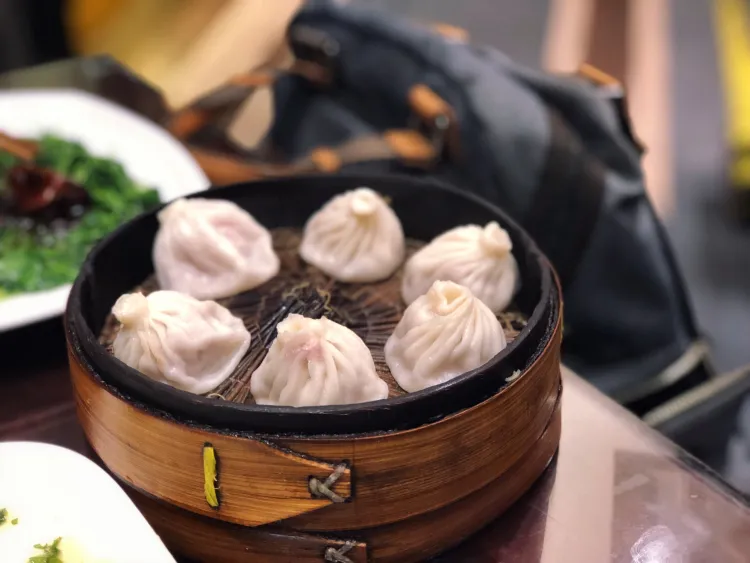
Crab-and-pork soup dumplings behind Nanjing East Road. Michelin Bib Gourmand, 2024 and 2025. Roughly 40% of the people in the queue with you are foreign tourists who found it on social media — which sounds like a warning but is actually a recommendation: this is local food that survived being discovered.
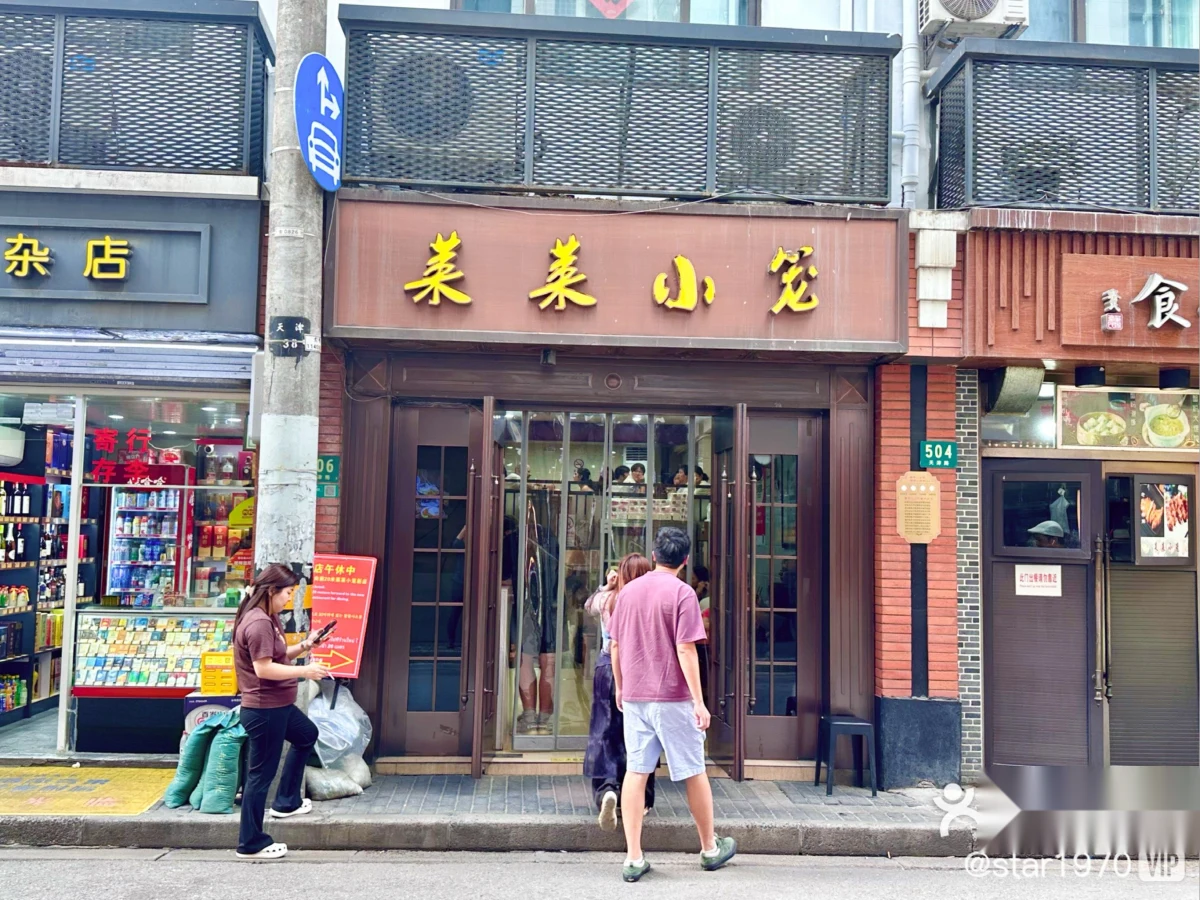
The move: order 蟹粉鲜肉小笼 (crab-and-pork xiaolongbao), eat the first one plain — no vinegar — then dip the rest in the ginger vinegar that arrives with the basket. Roughly 40% of the people queueing with you will be foreign tourists; this is the rare local institution that has quietly become an international one.
3. Huxi Old Longtang Noodles — the highest-rated bowl in this guide
Out in Changning, in a converted lane house, the highest Dianping taste score of anywhere on this list: 4.6. The signature is clam and pork-liver noodles. Order it if you eat offal; order the scallion-oil noodles if you don't. Either way you're eating at the top of the local league table.
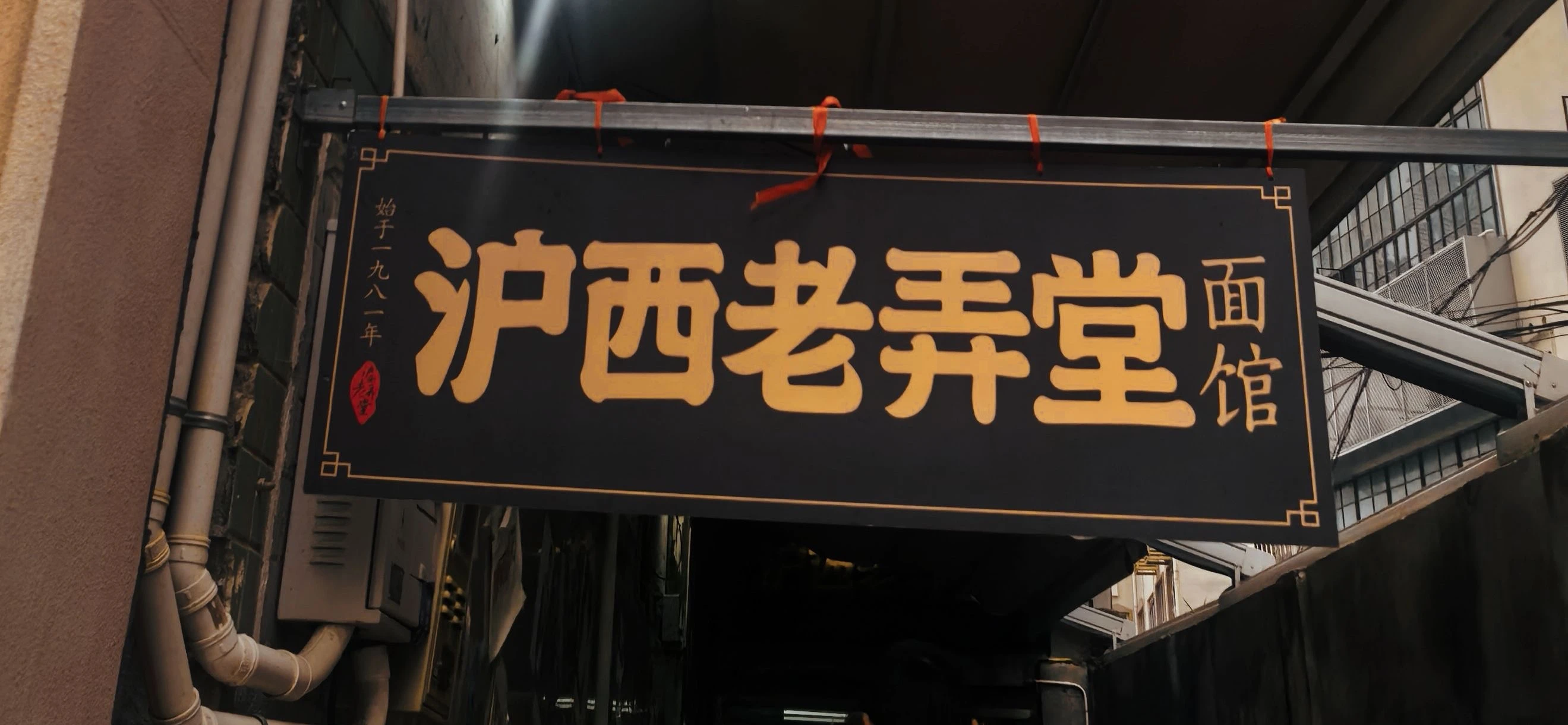
The signature is 蛤蜊猪肝面 — clam and pork-liver noodles. Order it and you'll be eating what the highest-rated bowl in this entire guide tastes like: taste 4.6 on Dianping, the top score of any shop here. The pork liver is the controversial half — silky if you're used to offal, challenging if you're not. The safe landing is 葱油拌面 (scallion oil noodles) with a fried pork chop.
4. Da Hu Chun — the other half of the shengjian argument
Shanghai has two schools of pan-fried pork bun, and every local has an allegiance. Da Hu Chun is the old school: no soup inside, all crisp bottom and bready top, sold by weight. The new-school full-of-soup version is easier to love; this one is easier to respect.
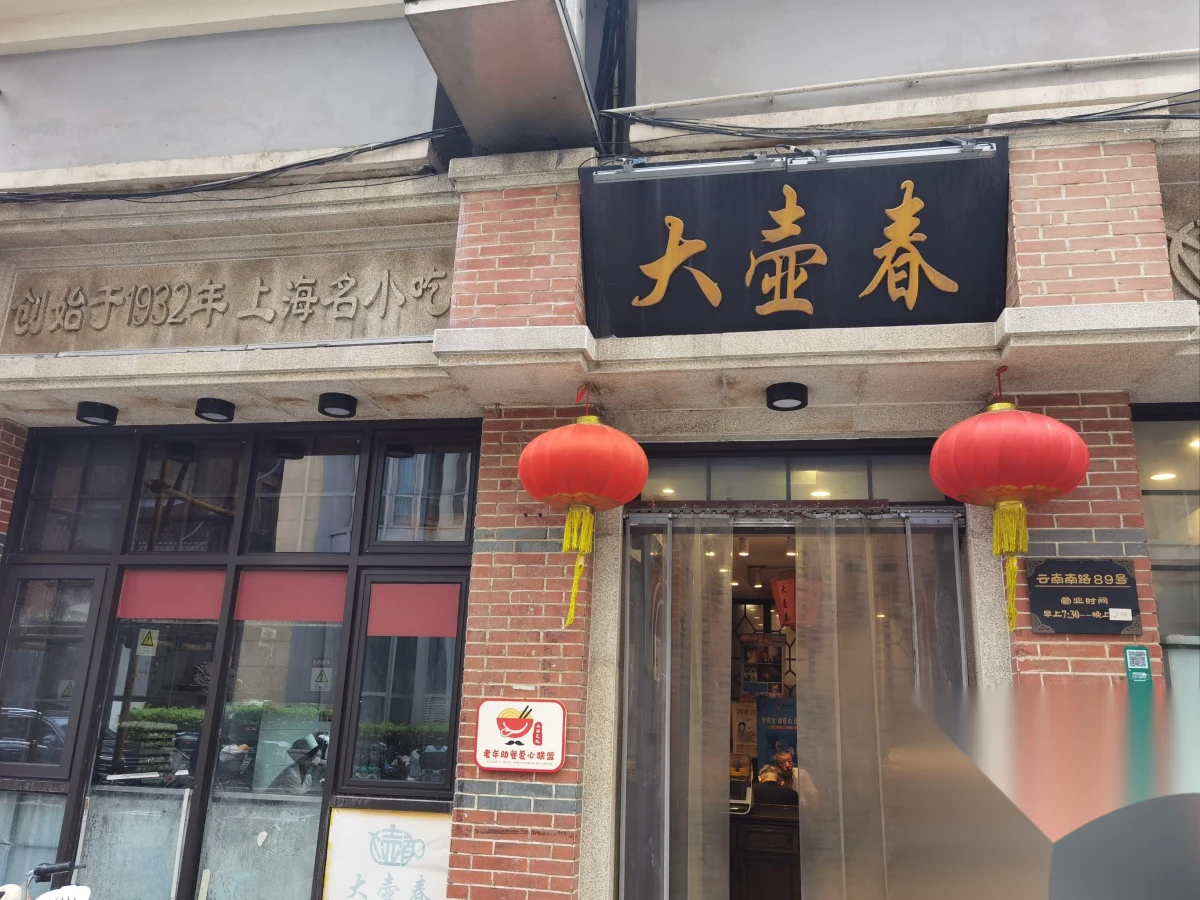
Shanghai's "dry-style" shengjian bao house — no aspic in the filling, so less soup but a deeply crisp bottom. The local order is 「二两鲜肉生煎」 (100g pork buns) with a bowl of curry beef soup.
5. Lanxin — six tables of red-braised pork
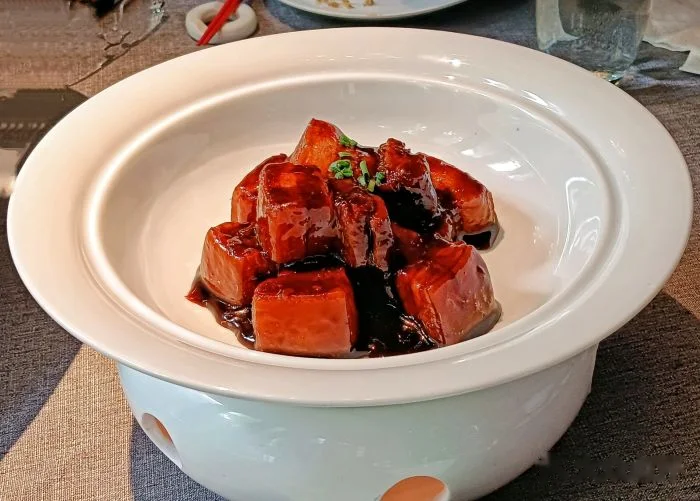
The restaurant English-language food writers have called "the real Shanghai" for a decade. Six tables, two sittings, one benchmark dish: 红烧肉, red-braised pork belly, lacquered and sweet and falling apart.
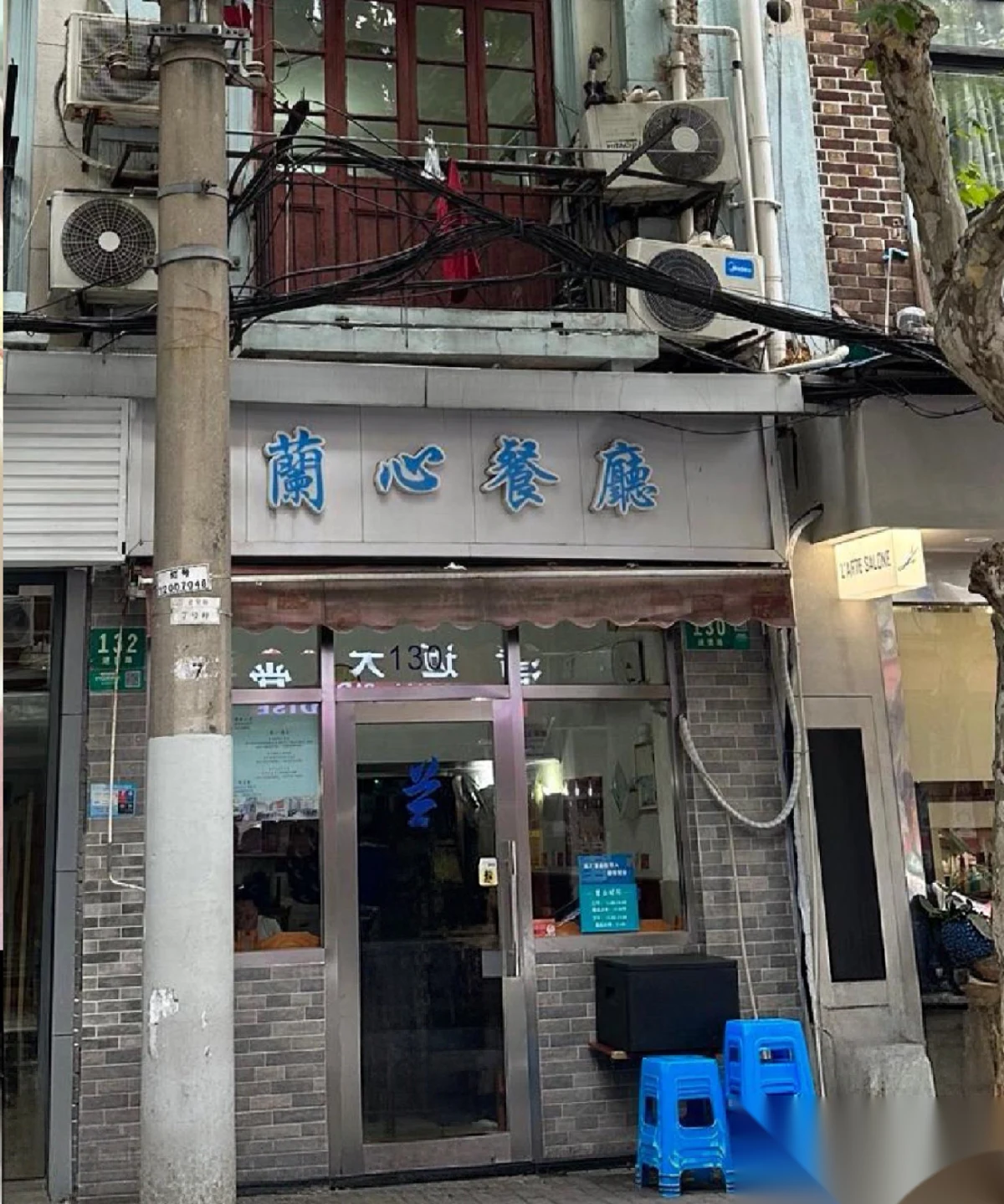
The 红烧肉 (red-braised pork) here is the benchmark version — lacquered, sweet, falling apart. Order it with 草头 (stir-fried alfalfa greens) and 油爆虾 (flash-fried shrimp). English-language food writers have called this stretch of Jinxián Road "the real Shanghai" for a decade; this is the table they mean.
6. Jia Jia Tang Bao — cash only, line starts at 10
Every English guide to Shanghai says the same three things about this place — cash only, line starts at 10AM, ¥25 for 12 dumplings — because all three are still true. The soup dumplings are violent in the best way. Bring notes.
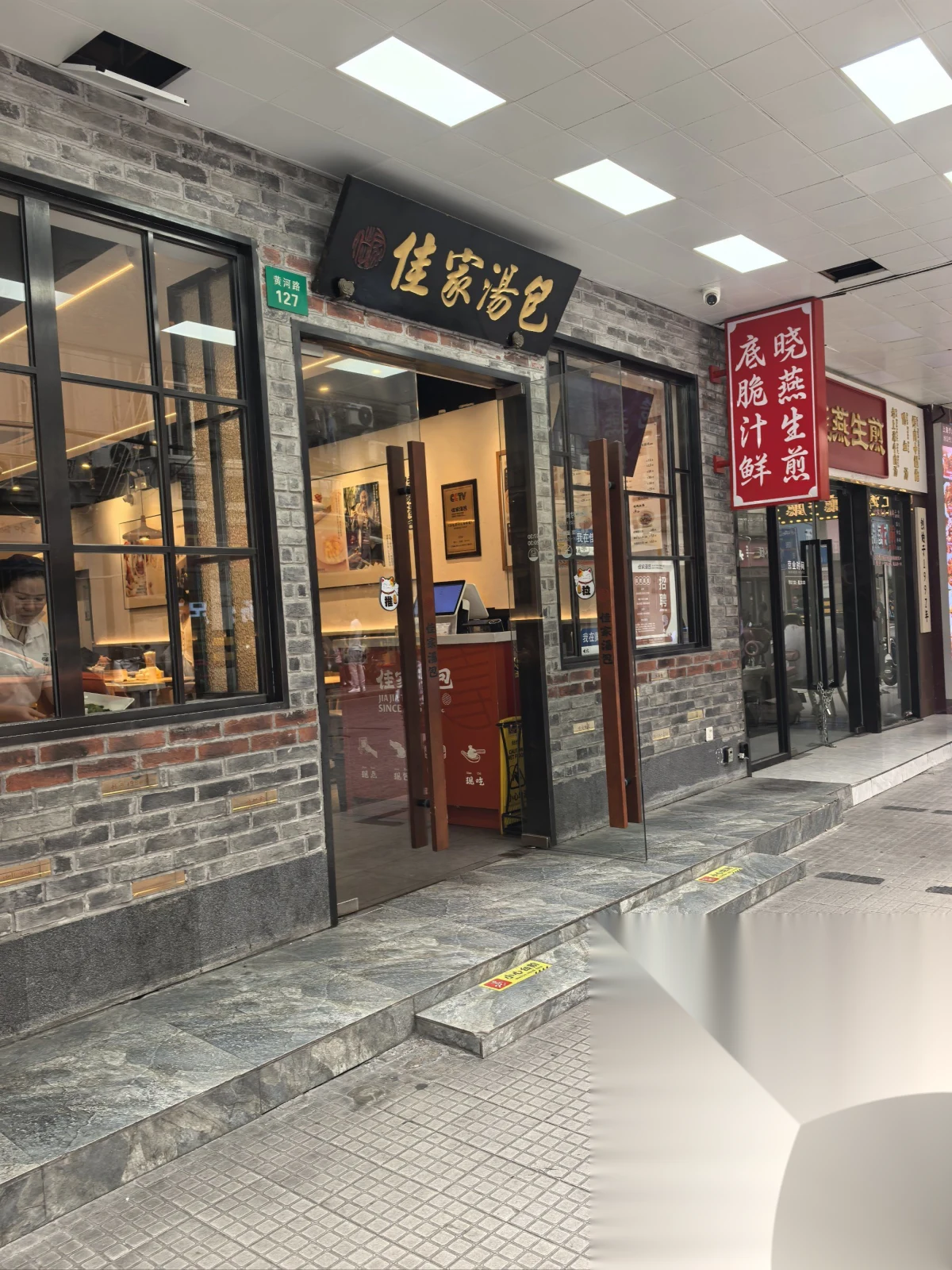
Every English-language Shanghai guide says the same three things about this shop — "cash only", "line starts at 10AM", "¥25 for 12 dumplings" — because they're all true and all still true. Order the 蟹粉鲜肉 (crab-pork) basket, add a small 小馄饨 (wonton soup). The skin is thinner and the soup more violent than at the tourist-flagship dumpling houses.
7. Wangjiasha — the 1945 dim sum counter system
Working the counters at Wangjiasha is a Shanghai skill: order at one window, pay at another, collect at a third, nobody explains it twice. The reward is crab-roe dumpling balls and pan-crisped noodles, and in spring, the qingtuan queue that wraps the block.
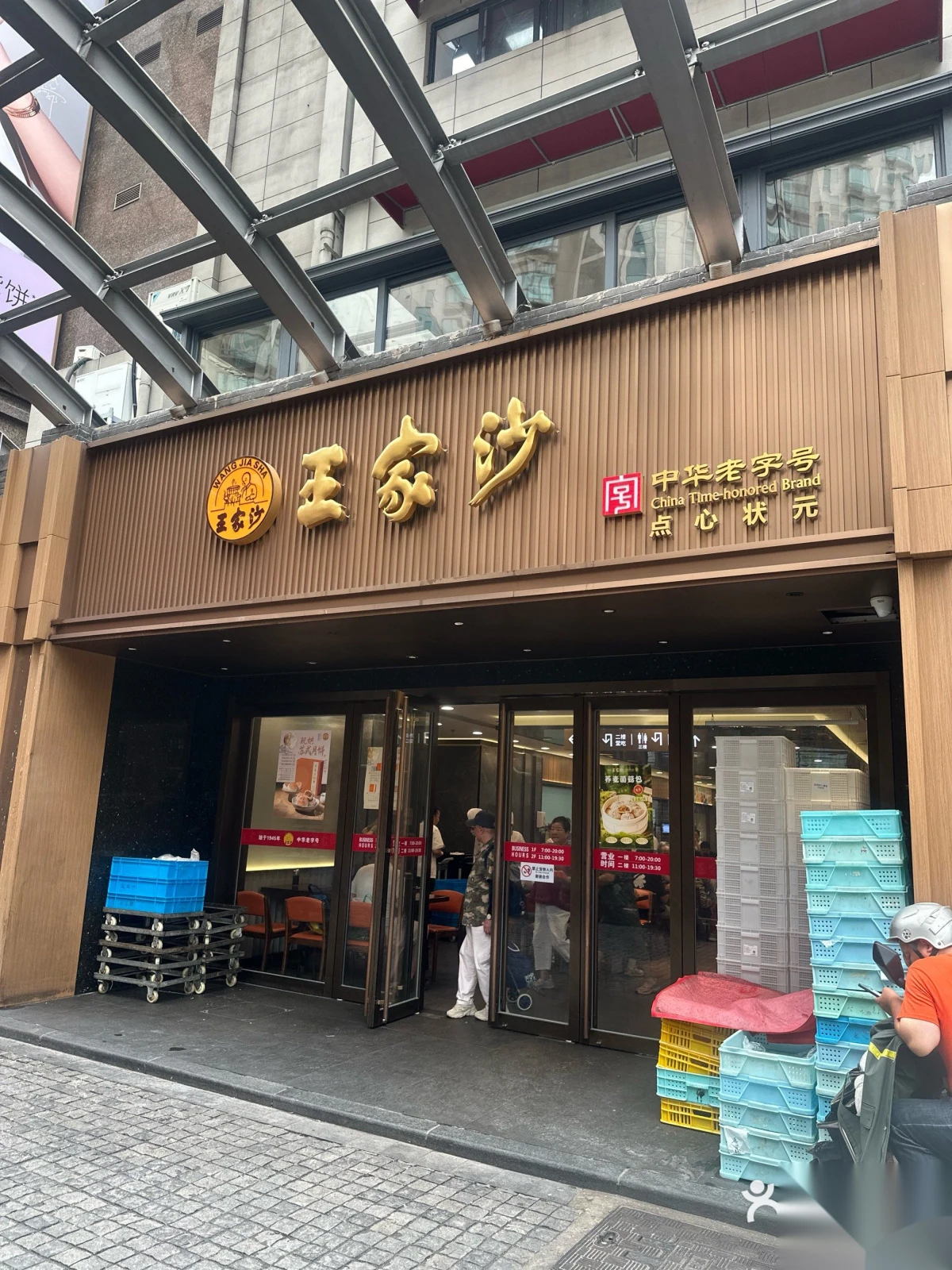
Order at the glass counters like a local: 蟹粉汤团 (crab-roe glutinous balls) in winter, 虾仁两面黄 (crisp-fried noodles with shrimp) any time, and 素菜包 (vegetable bun) straight from the steamer. In spring the qingtuan queue wraps around the block — that's the calendar telling you the shop matters.
8. Dexingguan — 1878, ten minutes' walk from the Bund
The oldest benbang noodle house in the city. One bowl built the reputation — braised pork hock with pickled greens — and the takeaway counter sells a pork mooncake you'll think about on the flight home.
The dish that built the reputation is 焖蹄雪菜大面 — braised pork hock with pickled-greens noodles, ¥30-odd and unchanged in spirit since the Qing dynasty. Go at 7am to see it eaten the traditional way: standing, quickly, before work. The 鲜肉月饼 (pork mooncake) from the takeaway counter is the stealth second reason to come.
9. Guangmingcun — the mooncake queue on Huaihai Road
Taste score 4.4, and a street window that sells fresh pork mooncakes hot from the oven, paper bag and all. Upstairs is a proper Shanghainese dining room; the queue outside and the dining room inside run on completely different rules.
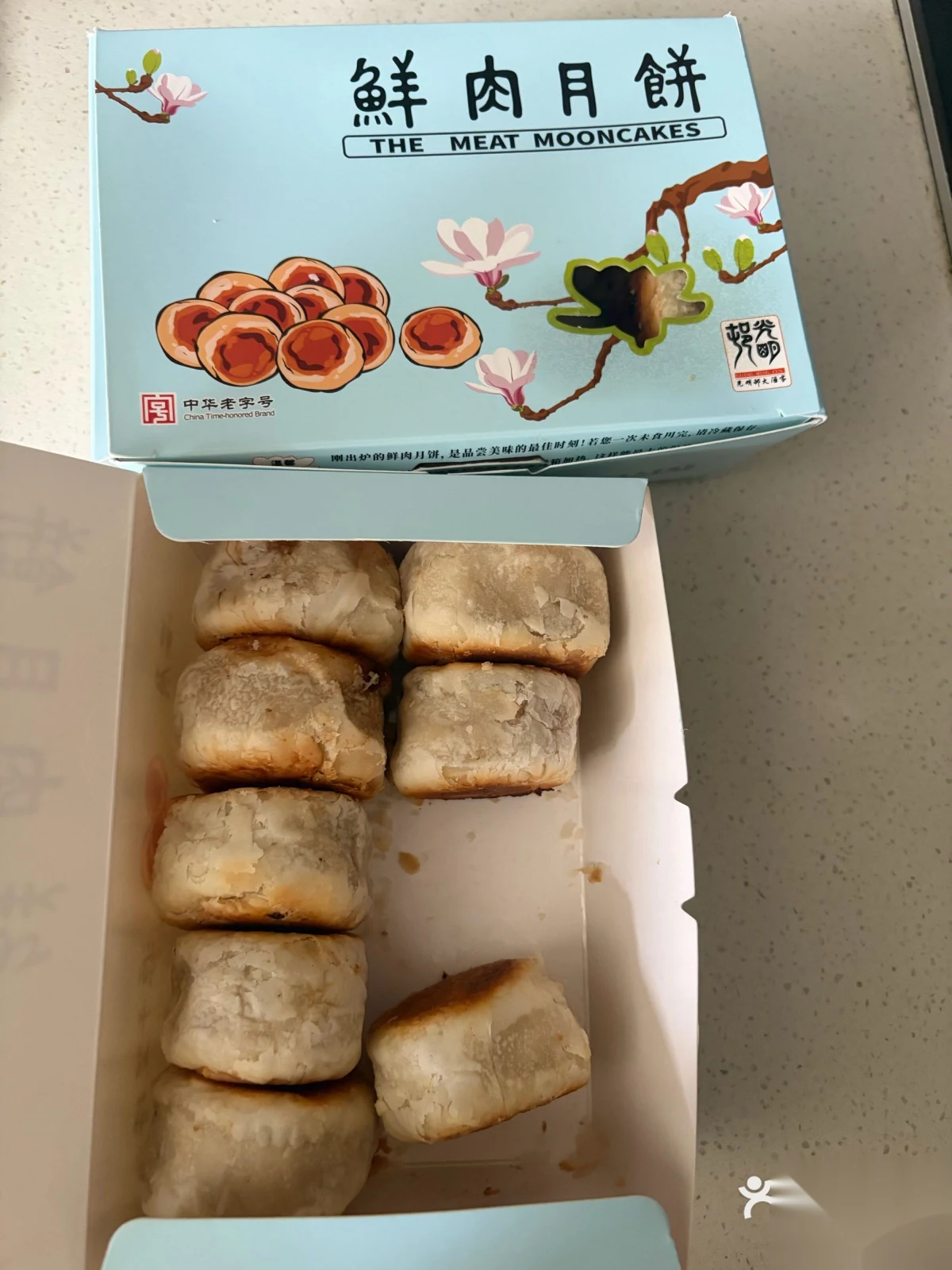
Two different reasons to come. The street window sells 鲜肉月饼 (fresh pork mooncakes) — eat one immediately, paper bag and all. Upstairs is a proper benbang dining room: order 特色酱鸭 (house soy duck) and 响油鳝丝 (sizzling eel). The queue and the dining room have completely different rules; don't confuse them.
10. Ma Haixia Yellow Croaker Noodles — the rebrand lesson
This one is a story about why this site exists. For twenty years this address was A Niang, one of the most-written-about noodle shops in the English-language Shanghai canon. The founder died, the shop changed hands, and today the sign reads 马海霞黄鱼面. Most foreign guides still send you to the old name. The yellow croaker noodles never stopped being the point.
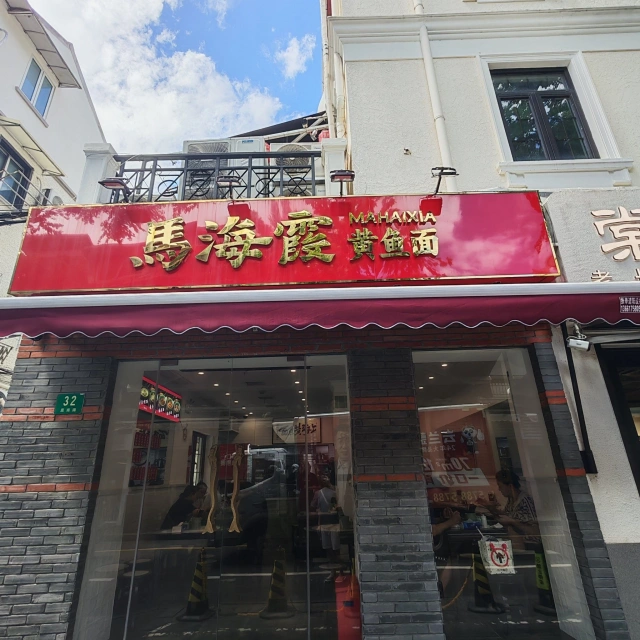
The signature is the yellow croaker noodle soup — locals order it as 「黄鱼面加咸菜」 (with pickled greens). The topping is cooked to order and often sells out after 11am. The shop is tiny; go early and you likely won't queue.
How to work the list
- Two clusters, mostly. Numbers 1, 2, 4, 6, 7, 8, 10 sit in or around the Huangpu core — the Bund, People's Square, Nanjing Road, Huaihai Road. You can knock out three in a morning without trying.
- Go at opening, not at noon. Old shops run out of things. The 7am–9am window at several of these is when locals eat, queues are shortest, and the food is freshest.
- Copy the Chinese name and address from each card above into Amap or Didi. Show the characters; don't attempt the pronunciation. Nobody expects you to.
- The queues are the review. A line of locals at 7:40am is worth more than any star rating in any language.
One more thing: every address, hour and price on this page was checked against the Chinese review platforms in September 2026, and each card carries the date it was verified. If a shop moves — they do, this being Shanghai — the card will tell you before you waste a trip. That's the whole idea.
Places in this guide
10 entriesMore from Shanghai
 Food
Food
Fifteen Minutes From The Bund, The Food Changes Completely
The Bund's own restaurants speak fluent English and take every card. Walk fifteen minutes inland and you're in a different Shanghai: olde...
Read →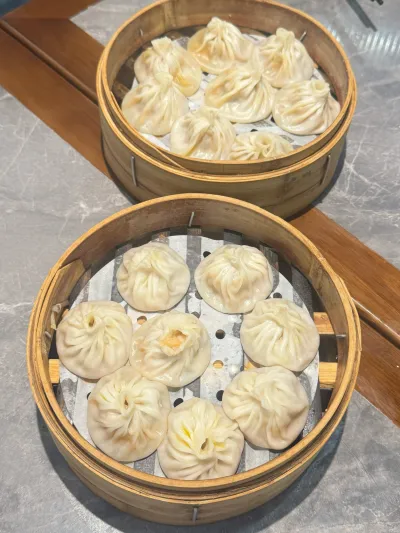 Food
Food
Liang, Long, Zhi — How Shanghai Actually Sells Its Food
Nothing at an old-school Shanghai shop is sold by "a portion". Noodles come in liang, buns come in liang, dumplings come in long, pancake...
Read →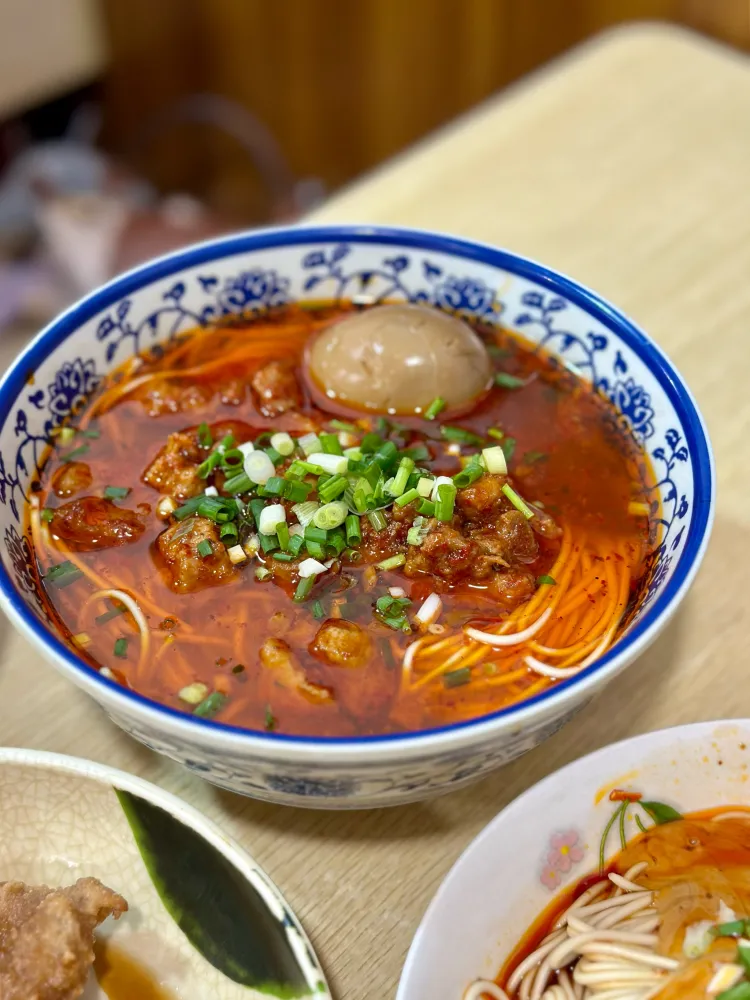 Food
Food
How To Order Noodles In Shanghai Like You Live Here
Hard noodles or soft. Soup on the side or in the bowl. Scallions held back or doubled. The words that change what arrives at your table —...
Read → Food
Food
Eating At Yu Garden Without Getting Trapped
Yu Garden Bazaar is where the invention of the soup dumpling is genuinely worth seeing — and where the worst meal of your trip is genuine...
Read →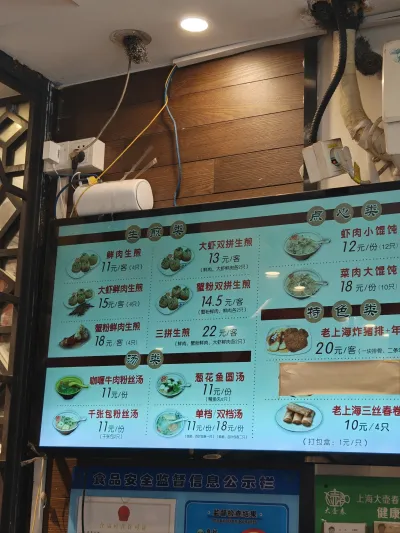 How-to
How to Order Food in China With No English
You don't need to speak Chinese. You need to copy, paste and point. The exact five moves that get food in front of you — plus the sentenc...
Read →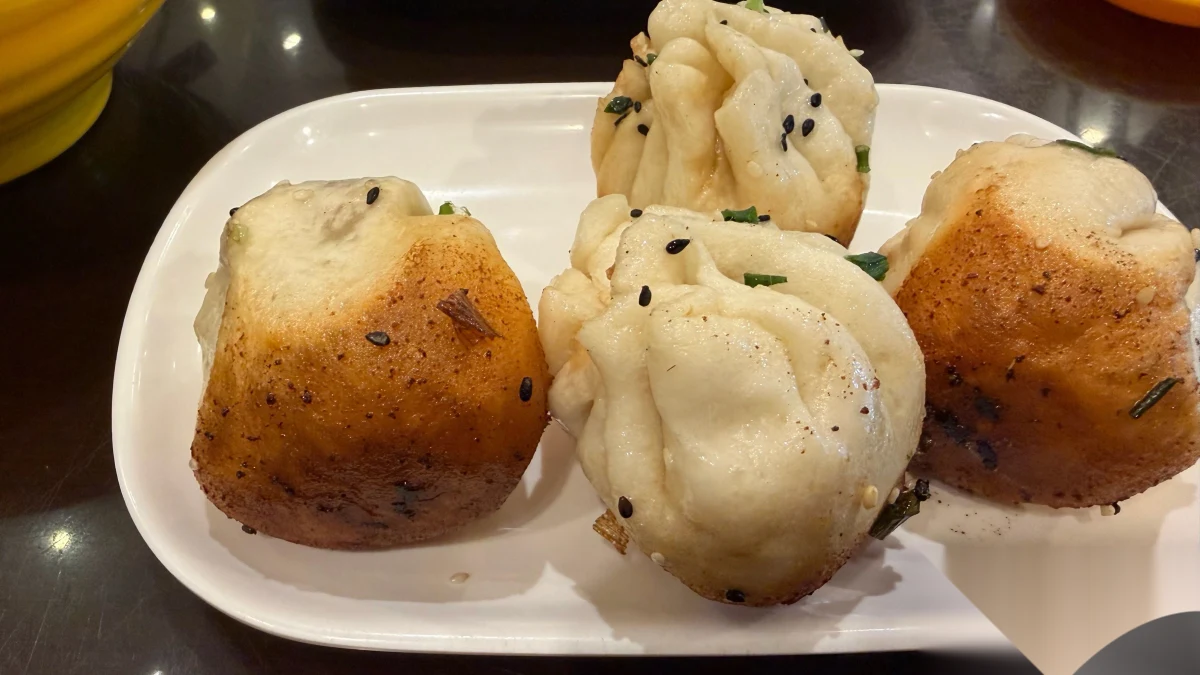 Food
Food
The Two Schools of Shanghai's Pan-Fried Bun
One bursts with scalding soup. One has almost none. Locals have been arguing about which is correct for a century — and most visitors onl...
Read →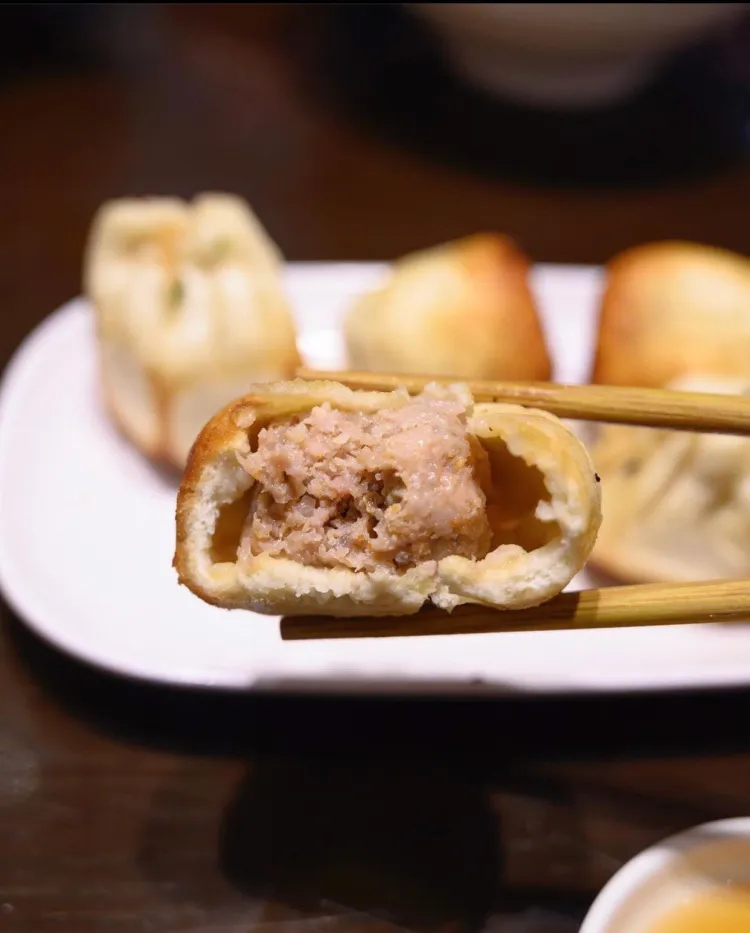 Food
Food
Where Shanghai Eats Breakfast
Four breakfasts, four street windows you would walk straight past. What locals eat before nine, what it costs, and the Chinese words that...
Read →